The phrase “yayo” is a popular slang term that has appeared in music, movies, internet culture, and street conversations for decades. Many people search for the yayo slang meaning after hearing it in rap songs, crime dramas, or online discussions.
While the word may sound playful or mysterious, it actually carries a strong connection to drug culture, especially cocaine references in American slang.
Over time, the meaning of “yayo” has expanded beyond its original use. Some people use it casually in music lyrics, memes, jokes, or pop culture references without fully understanding its background.
Because slang constantly evolves, words like “yayo” often gain multiple interpretations depending on region, generation, and context.
Understanding the yayo slang meaning requires looking at its origins, cultural influence, media usage, and how language changes over time. This article explains the term in detail, including where it came from, why it became popular, and how it is commonly used today.
What Does Yayo Mean in Slang?
Basic Definition of Yayo
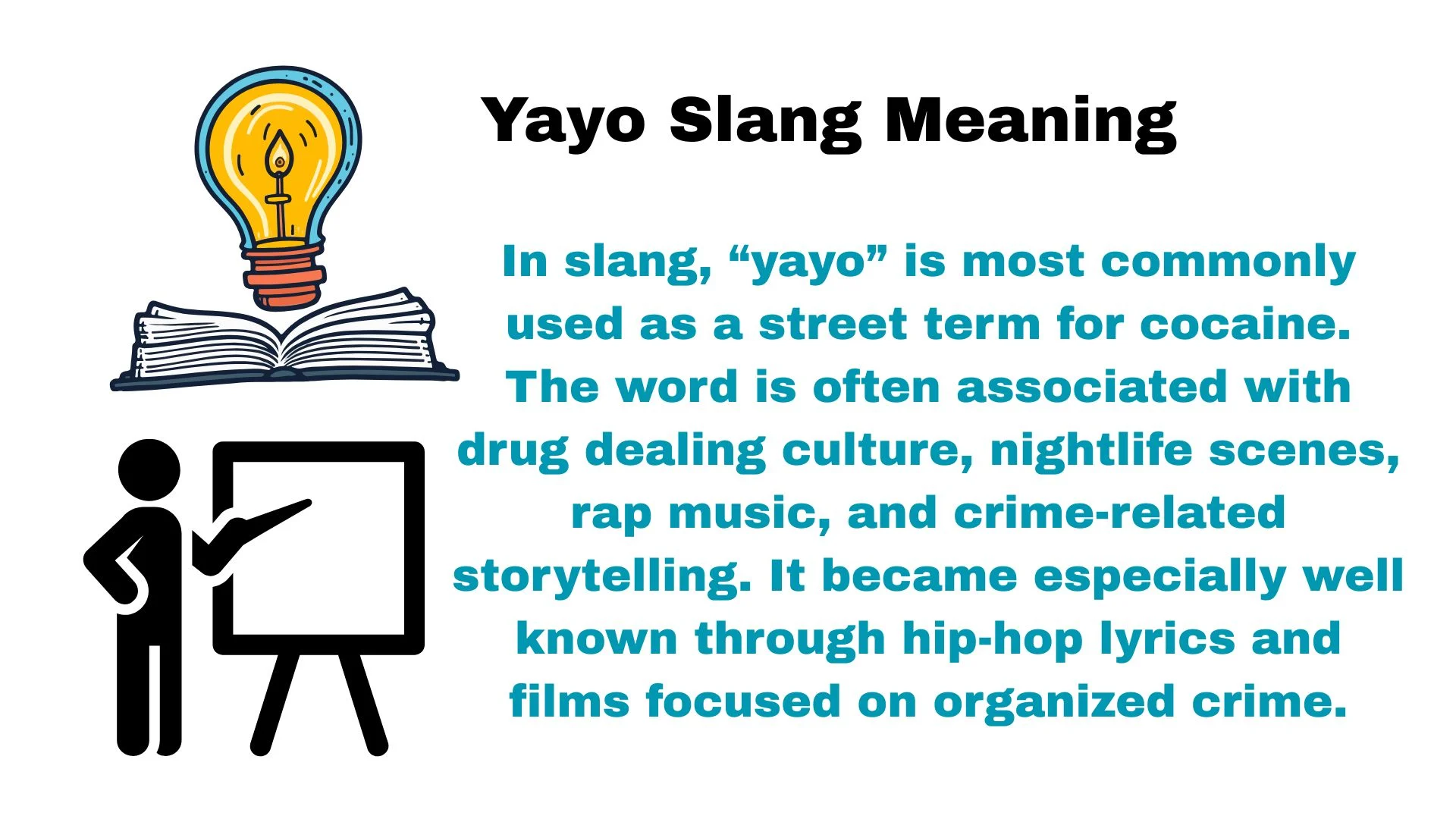
In slang, “yayo” is most commonly used as a street term for cocaine. The word is often associated with drug dealing culture, nightlife scenes, rap music, and crime-related storytelling. It became especially well known through hip-hop lyrics and films focused on organized crime.
The term usually refers specifically to powdered cocaine rather than other drugs. In many songs and conversations, “yayo” symbolizes money, danger, illegal business, fast lifestyles, or underground culture.
Common Usage in Conversation
People may use the word in sentences like:
- “That rapper keeps talking about yayo in his songs.”
- “The movie showed smugglers moving yayo across borders.”
- “Old-school hip-hop used yayo references frequently.”
In most situations, the term is not considered formal language. It belongs to slang vocabulary and is usually connected to entertainment or street culture.
Is Yayo Always About Drugs?
Not always. In some modern internet conversations, people use “yayo” jokingly or ironically without directly referring to cocaine. Certain music fans may repeat the term simply because it sounds catchy or iconic in songs.
However, its original and primary meaning still points toward cocaine-related slang.
Origins of the Word Yayo
Spanish Language Influence
Many language experts believe “yayo” came from Spanish-speaking communities. Some connect it to variations of the Spanish word for cocaine used in Latin American street slang.
Because drug trafficking routes historically involved Spanish-speaking regions, many related slang terms entered American street vocabulary through cultural exchange.
Rise During the 1970s and 1980s
The term became more recognizable during the rise of cocaine culture in the United States during the 1970s and 1980s. During this period, crime films, urban nightlife, and music industries frequently referenced cocaine use and trafficking.
As hip-hop culture grew, artists adopted words like “yayo” to describe wealth, risk, power, and survival in difficult environments.
Influence of the Movie Scarface
One of the biggest reasons for the popularity of the term was the movie Scarface starring Al Pacino. The film centered heavily around cocaine trafficking, and fans often associate “yayo” with the movie’s criminal world.
Even decades later, many people first hear the slang through references connected to Scarface culture.
Yayo in Hip-Hop and Music
Why Rappers Use the Term
Hip-hop artists often use vivid storytelling to describe street life, struggle, ambition, crime, or survival. Because cocaine trafficking played a role in some urban communities, slang terms like “yayo” naturally appeared in lyrics.
The word became popular because it is short, memorable, and rhythmically effective in songs.
Famous Songs Featuring Yayo
Several artists and groups have used the term in song titles or lyrics. It appears across classic rap, trap music, and underground hip-hop scenes.
Examples include:
- Songs titled “Yayo”
- References in gangster rap
- Lyrics discussing drug trade realities
- Metaphorical uses symbolizing money or hustle
In many cases, listeners repeat the term because of musical influence rather than direct involvement with illegal activities.
Pop Culture Expansion
As rap music spread worldwide, the slang traveled internationally. Today, even people outside American street culture may recognize the word from entertainment media.
This shows how music can transform local slang into global vocabulary.
Different Meanings Depending on Context
Literal Meaning
The literal slang meaning of “yayo” remains cocaine. This is the most widely accepted interpretation.
Symbolic Meaning
In music and storytelling, “yayo” can symbolize:
- Fast money
- Luxury lifestyles
- Risk-taking
- Criminal environments
- Street survival
- Power and influence
Humorous or Meme Usage
Online, younger users sometimes say “yayo” humorously without serious intent. Memes, reaction videos, and parody songs occasionally use the term because of its dramatic reputation in pop culture.
Still, understanding the original meaning is important before using it casually.
Is Yayo Offensive or Dangerous Slang?
Social Sensitivity
The term itself is not considered a direct insult, but it is strongly linked to illegal drugs. Because of this connection, using it in professional or formal settings is inappropriate.
Risks of Casual Usage
Some people repeat slang from music without understanding the implications. Since “yayo” refers to cocaine culture, using it carelessly may create misunderstandings.
Different audiences may react differently depending on age, background, and cultural familiarity.
Internet Influence on Slang
Modern internet culture spreads slang quickly. Words that once belonged only to small communities can become mainstream within weeks through TikTok, YouTube, and music streaming platforms.
That rapid exposure often removes context from the original meaning.
Slang Similar to Yayo
Other Drug-Related Slang Terms
English slang includes many nicknames for drugs. Examples include:
- Snow
- Coke
- Blow
- White girl
- Powder
These terms vary by region and generation.
Why Slang Changes Frequently
Slang constantly evolves because communities create new coded language for identity, secrecy, humor, or creativity. Music and social media accelerate this process dramatically.
A term popular today may disappear within a few years, while older slang like “yayo” survives because of its cultural history.
Yayo in Modern Internet Culture
TikTok and Social Media
On social platforms, people sometimes quote rap lyrics or movie scenes using the word “yayo.” In many cases, users are referencing entertainment culture rather than literal drug activity.
Meme Culture
Internet memes often revive older slang. Because “yayo” sounds unique and recognizable, creators use it in jokes, edits, parody videos, and nostalgic content.
Continued Popularity
Even younger generations who never experienced the original cocaine-era culture still recognize the word through music and streaming platforms.
That continued exposure keeps the slang alive decades after it first became popular.
Should You Use the Word Yayo?
Understanding Context Matters
Before using any slang term, it is important to understand its meaning, history, and cultural associations. Since “yayo” is connected to illegal drug references, many people avoid using it in serious conversations.
Casual vs Professional Settings
The term may appear acceptable in discussions about music, movies, or slang education, but it is generally unsuitable for workplaces, schools, or formal communication.
Cultural Awareness
Learning slang can help people better understand music, media, and internet culture. However, awareness of context prevents accidental misuse.
Conclusion
The yayo slang meaning is most commonly linked to cocaine and drug culture, especially within hip-hop music, movies, and street slang history.
The term gained widespread recognition during the late twentieth century through entertainment media and remains popular today because of rap lyrics, internet memes, and pop culture references.
Although some people now use the word casually or humorously, its original meaning still carries strong associations with illegal drugs and criminal lifestyles. Understanding where slang comes from helps people communicate more clearly and responsibly.
Language changes constantly, and terms like “yayo” demonstrate how music, culture, and media can transform regional slang into globally recognized expressions.