The phrase running slang meaning is commonly searched by people who come across the word “running” in conversations, social media posts, text messages, sports discussions, or even technical fields. While most people immediately think of the physical activity of running, the word can have several different meanings depending on the situation.
In everyday conversations, “running” may describe something that is currently operating, continuing, or actively happening. In slang, it can also refer to avoiding someone, escaping responsibility, or staying active in a particular situation.
Understanding the meaning of “running” becomes even more important because language changes across platforms like WhatsApp, Instagram, TikTok, and online dating apps. At the same time, technical fields such as physics, medicine, and aviation use the same word with entirely different definitions.
This guide explains the meaning of running in simple language, explores its origins, highlights its use across different contexts, clears up common misunderstandings, and compares it with similar terms so you can understand exactly what people mean whenever you encounter it.
Meaning & Definition
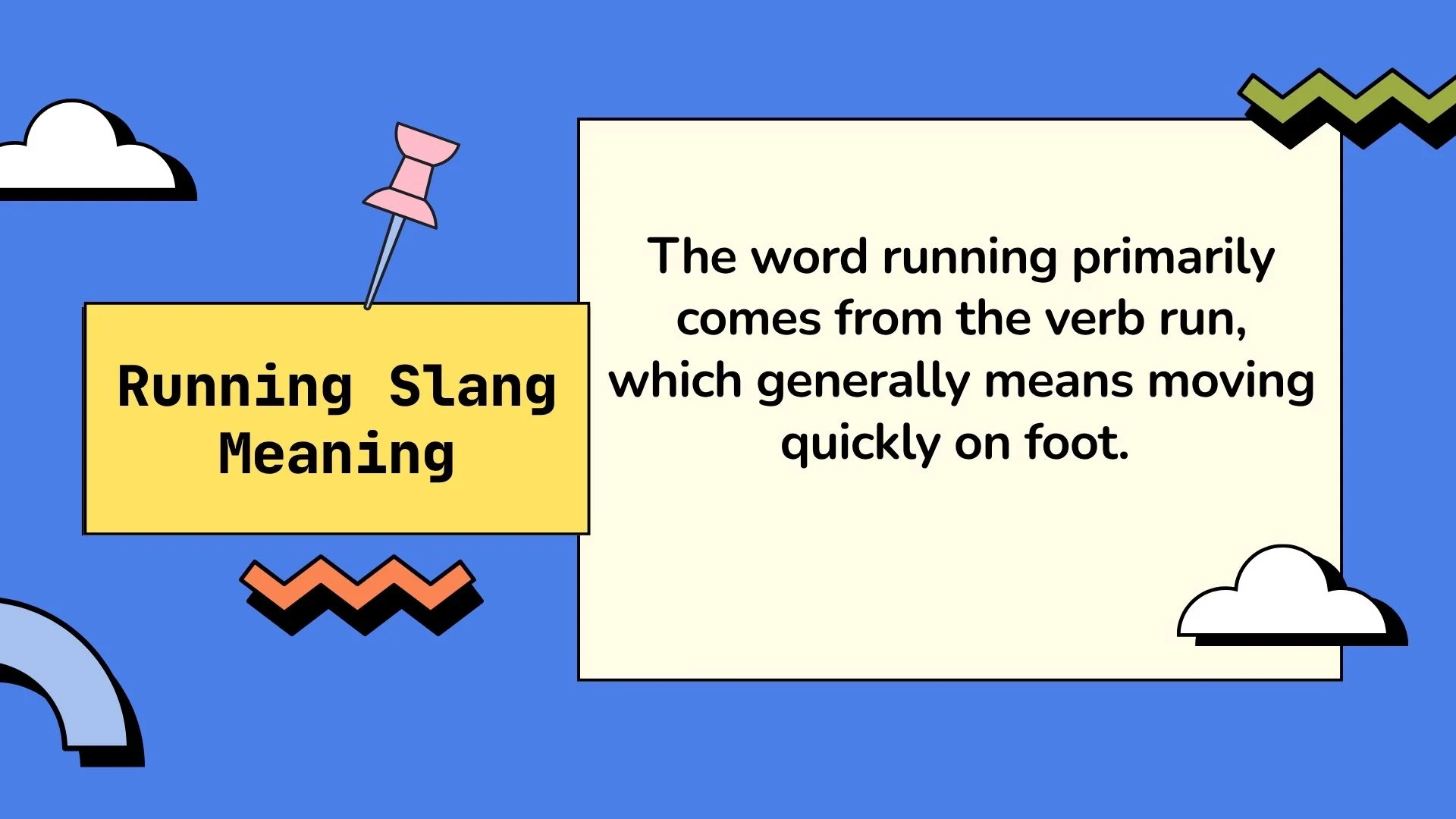
The word running primarily comes from the verb run, which generally means moving quickly on foot. However, its meaning extends far beyond physical movement. Depending on the context, running can describe an action, a condition, a process, or even a style of communication.
In everyday English, running often means something that is operating continuously. For example:
- “The machine is running.”
- “The water is still running.”
- “The meeting is running late.”
In slang, running can take on more informal meanings. Someone might say:
- “He’s running from his problems.”
- “She’s running game.”
- “They’re running the group.”
These expressions do not involve physical running. Instead, they describe behaviors, influence, avoidance, or leadership.
Running can also describe ongoing situations:
- A running joke
- A running theme
- A running conversation
Here, the word means something that continues over time.
Because English relies heavily on context, the meaning of running changes depending on who is speaking, where it is used, and what topic is being discussed. This flexibility makes it one of the most commonly used words in both formal and informal communication.
Background
The word running has existed in English for centuries and originates from the Old English verb rinnan, meaning “to flow” or “to move rapidly.” Over time, its meaning expanded beyond physical movement into many figurative expressions.
As English evolved, people began using running to describe anything that continued without interruption. This included water flowing, machinery operating, businesses functioning, and ongoing events.
The rise of internet culture further expanded the meaning. Online communities started using running in creative expressions such as:
- Running jokes
- Running memes
- Running trends
- Running challenges
Sports also played a significant role in popularizing the word. Athletes, coaches, and fitness communities frequently use running literally, while gaming communities use it metaphorically in phrases like “running a server” or “running a match.”
Today, the word appears in education, entertainment, technology, business, healthcare, engineering, and social media, making it one of the most versatile words in modern English.
Usage in Different Contexts
Everyday Conversation
In daily conversations, running often refers to something currently happening or functioning.
Examples include:
- The air conditioner is running.
- The project is running smoothly.
- The event is still running.
Social Media
Social media users frequently use running metaphorically.
Examples:
- Running this trend.
- Running the comments.
- Running with the joke.
These expressions usually describe popularity, participation, or continued activity.
Gaming
Gamers often say:
- Running a server
- Running a mission
- Running ranked games
Here, running means operating or participating in gameplay.
Business
In professional settings, running commonly refers to managing operations.
Examples:
- Running a company
- Running a department
- Running a campaign
- Running advertisements
Sports
In sports, running keeps its literal meaning while also appearing in phrases such as:
- Running drills
- Running practice
- Running laps
- Running strategy
Each meaning depends on the surrounding conversation rather than the word itself.
Meaning in Chat, WhatsApp, Instagram, TikTok
On messaging apps and social media, running usually carries informal meanings.
People may say:
- “I’m running late.”
- “Running errands.”
- “Running out now.”
This simply communicates current activity or delay.
Instagram captions often include phrases like:
- Running the world.
- Running on coffee.
- Running after dreams.
These expressions are motivational or humorous rather than literal.
TikTok
TikTok users frequently say:
- Running this trend.
- Running the algorithm.
- Running the challenge.
These phrases suggest active participation or popularity.
Online Chat
Friends might use expressions such as:
- Stop running.
- He’s running away.
- She’s running the conversation.
Depending on the context, these may refer to avoiding something, leading a discussion, or simply leaving a conversation.
Understanding the surrounding message is always the key to interpreting the intended meaning.
Meaning in Physics, Medical, and Aircraft Terminology
Running in Physics
In physics, running often refers to values or properties that change as conditions change. Scientists may discuss running variables, running averages, or running measurements during experiments and calculations.
Running in Medical Terminology
Medical professionals use running in several ways, including:
- Running fever
- Running nose
- Running IV
- Running tests
Each phrase has a specific medical meaning related to symptoms, treatment, or procedures.
Running in Aircraft Terminology
In aviation, running commonly refers to systems or engines that are operating.
Examples include:
- Engine running
- Running checklist
- Running lights
- Running procedures
Pilots and maintenance crews use the term to describe equipment that is active or functioning correctly.
These technical meanings differ completely from slang usage and should always be understood within their professional context.
Common Misconceptions
Many people assume running always refers to physical exercise, but this is only one of its many meanings.
Common misunderstandings include:
- Believing running always means jogging.
- Assuming slang uses are always negative.
- Thinking running in technical fields has the same meaning as everyday speech.
- Confusing running with escaping responsibility in every situation.
In reality, running often means operating, continuing, managing, leading, or participating depending on the context.
Another misconception is that every online use has hidden slang meaning. In many cases, people simply use the word literally or to describe ongoing activity.
Similar Terms & Alternatives
Several words can express meanings similar to running depending on the context.
For movement:
- Jogging
- Sprinting
- Racing
For operating:
- Working
- Functioning
- Operating
- Active
For managing:
- Leading
- Controlling
- Managing
- Supervising
For continuing:
- Ongoing
- Continuous
- Current
- Active
Choosing the correct alternative depends entirely on the intended meaning rather than replacing the word universally.
How to Respond to It
The best response depends on how the word is being used.
If someone says:
- “I’m running late.”
You could reply:
- “No problem.”
- “Take your time.”
If someone says:
- “We’re running the event.”
You might respond:
- “Sounds great.”
- “Hope everything goes smoothly.”
If someone jokes:
- “He’s running from responsibility.”
A light-hearted response could be:
- “Hopefully not forever!”
- “He’ll have to face it eventually.”
On social media, responses often match the tone of the original post, whether humorous, supportive, or conversational.
Always consider the surrounding context before responding.
Differences from Similar Words
Although running shares similarities with several words, there are important differences.
| Word | Primary Meaning | Difference |
| Running | Moving, operating, continuing | Broadest and most flexible meaning |
| Jogging | Slow running for exercise | Only relates to physical activity |
| Operating | Functioning | Usually applies to machines or systems |
| Managing | Controlling activities | Focuses on leadership rather than movement |
| Escaping | Avoiding danger or responsibility | More specific than slang uses of running |
| Active | Currently functioning | Describes a state rather than an action |
Recognizing these differences helps avoid misunderstandings in both casual and professional communication.
Relevance in Online Conversations & Dating Apps
The word running appears regularly in online communities and dating platforms.
Examples include:
- Running late for our date.
- Running errands today.
- Running on zero sleep.
- Running away from red flags.
- Running this conversation.
Dating app users often use the word casually to describe schedules, personality, humor, or lifestyle.
Memes and internet culture have also made expressions like “running on caffeine,” “running out of patience,” and “running the comments” extremely popular.
Because digital communication relies heavily on context and tone, readers should avoid interpreting every use as slang. Most uses simply describe current activities or ongoing situations.
Conclusion
The running slang meaning extends far beyond the simple act of moving quickly on foot. Depending on the context, running can describe operating systems, ongoing events, leadership, avoidance, participation, or continuous activity.
Its flexibility explains why it appears so frequently in conversations, social media, business, sports, healthcare, physics, aviation, and online dating platforms.
The key to understanding the word is paying attention to the surrounding conversation rather than relying on a single definition.
Whether someone says they are running late, running a business, running a trend, or running tests, each expression communicates a unique idea shaped by its context. As language continues to evolve online and offline, running remains one of the most adaptable and widely used words in modern English, making it valuable to understand for both everyday communication and professional settings.