The term emo slang meaning often confuses people because it appears in different contexts—music culture, online chats, and even social media captions. Many users search for this phrase to understand whether “emo” is an insult, a personality label, or simply a style of expression.
Originally tied to a music genre, the word has evolved into a broader slang term that reflects emotional sensitivity, introspection, and sometimes a specific aesthetic.
Today, “emo” is widely used on platforms like TikTok, Instagram, and WhatsApp, often in humorous, exaggerated, or even affectionate ways. However, its meaning can change depending on tone and context, which makes it important to interpret it correctly.
This guide breaks down everything you need to know—from its origin to how it’s used in daily conversations—so you can understand and respond confidently when you come across it online or offline.
Meaning & Definition
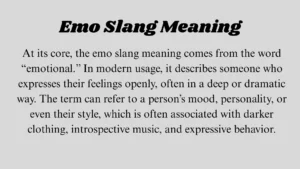
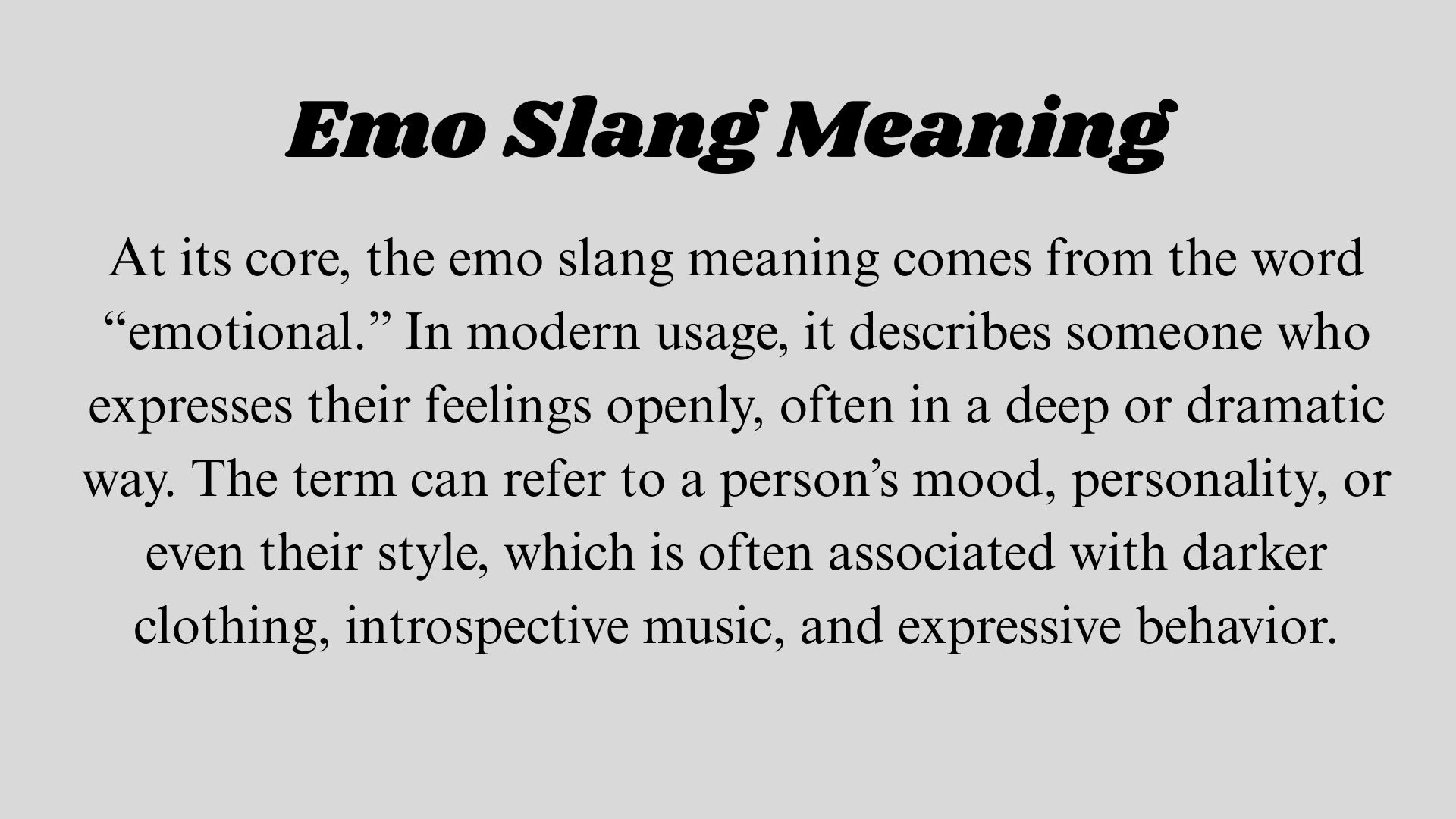
At its core, the emo slang meaning comes from the word “emotional.” In modern usage, it describes someone who expresses their feelings openly, often in a deep or dramatic way. The term can refer to a person’s mood, personality, or even their style, which is often associated with darker clothing, introspective music, and expressive behavior.
In slang, calling someone “emo” can have different interpretations. It might mean they are sensitive, thoughtful, or prone to overthinking. For example, if someone says, “Why are you being so emo?” they may be pointing out that the person is reacting emotionally or acting unusually serious. However, the tone matters—a close friend might say it jokingly, while a stranger might use it more critically.
Importantly, the word isn’t always negative. Many people proudly identify as emo, especially within subcultures that value emotional honesty and artistic expression. In these cases, being “emo” represents authenticity and depth rather than weakness.
Over time, the slang has softened. What was once a label tied to a niche music scene is now a casual descriptor used in everyday language. Whether it’s used playfully or seriously, the meaning largely depends on context, relationship, and intent.
Background with Examples
The emo slang meaning has roots in the 1980s music scene, specifically “emotional hardcore” or “emocore,” a subgenre of punk rock. Bands began focusing on personal lyrics, emotional struggles, and introspection, which set them apart from traditional punk music. As the genre evolved in the early 2000s, it gained mainstream popularity with bands like My Chemical Romance and Fall Out Boy.
During this time, “emo” became more than music—it turned into a cultural identity. Teenagers adopted a distinct style: dark clothing, side-swept hair, and expressive fashion choices. The label also became associated with sensitivity and emotional openness.
Examples of usage:
- “I used to listen to emo bands in high school.”
- “That song is so emo—it makes me think about life.”
- “Don’t get emo about it; it’s not a big deal.”
As social media grew, the meaning expanded further. People began using “emo” in memes and jokes, often exaggerating sadness for humor. For instance:
- “It’s raining again—time to go full emo mode.”
- “Late-night thoughts got me feeling emo.”
This evolution shows how the term shifted from a specific cultural identity to a flexible slang expression used in everyday communication.
Usage in Different Contexts
Understanding the emo slang meaning requires looking at how it’s used across various settings. In casual conversations, it often describes someone being overly emotional or dramatic. Among friends, it can be playful and harmless, like teasing someone for overthinking a small issue.
On social media, the term takes on a more exaggerated tone. Users may describe themselves as “emo” when sharing sad quotes, deep thoughts, or nostalgic content. In captions, it’s often used humorously:
- “Just an emo night with my playlist.”
- “Feeling emo for no reason today.”
In chat environments like WhatsApp or Messenger, “emo” is typically shorthand for emotional behavior. For example:
- “Why are you so emo today?”
- “I’m just in an emo mood.”
In professional or formal settings, however, the term is rarely appropriate. Using slang like “emo” in workplace communication may seem unprofessional or unclear.
Interestingly, in creative fields like music, writing, or art, “emo” can be a compliment. It may suggest depth, vulnerability, and emotional richness, which are valued traits in storytelling and artistic expression.
Meaning in Chat, WhatsApp, Instagram, TikTok
In digital communication, the emo slang meaning becomes even more dynamic. On platforms like WhatsApp, it’s often used in quick, informal exchanges to describe mood:
- “I’m feeling emo today 😔”
- “Don’t go emo on me!”
On Instagram, the term is commonly seen in captions paired with moody photos, black-and-white edits, or reflective quotes. It helps convey a certain vibe without needing long explanations.
TikTok has taken the meaning further by blending humor with relatability. Users often exaggerate “emo behavior” in short videos, turning it into a trend. For example:
- Acting overly dramatic about minor inconveniences
- Sharing “emo playlists” or sad song compilations
In these contexts, “emo” is less about identity and more about momentary feelings. It can describe a temporary mood rather than a permanent personality.
Overall, the slang is widely accepted in online spaces because it’s easy to understand and adaptable. However, tone still matters—what sounds funny in a meme could feel offensive in a serious conversation.
Meaning in Physics, Medical, and Aircraft Terminology
Unlike many slang terms, the emo slang meaning does not have a direct or formal definition in fields like physics, medicine, or aviation. In these disciplines, “emo” is not a recognized technical term.
However, confusion sometimes arises because abbreviations in professional fields can resemble slang. For example:
- In medicine, abbreviations are common, but “EMO” is not widely used as a standard term.
- In aviation, codes and acronyms exist, but “emo” does not hold a specific meaning.
- In physics, terminology is highly structured, and slang words like “emo” are not part of the vocabulary.
This highlights an important distinction: slang evolves informally through culture and communication, while technical terminology is standardized and precise.
If someone uses “emo” in a professional or academic context, it is almost always referring back to its informal meaning rather than a technical definition. Understanding this helps avoid misinterpretation, especially in serious discussions.
Common Misconceptions
There are several misunderstandings surrounding the emo slang meaning. One of the most common is that it always refers to sadness or depression. While the term can describe emotional expression, it doesn’t necessarily indicate mental health issues.
Another misconception is that “emo” is always an insult. In reality, its tone depends on context. Among friends, it’s often used playfully or affectionately. In some communities, it’s even a positive identity tied to creativity and authenticity.
Some people also believe that “emo” is only about appearance—dark clothes, hairstyles, and music preferences. While these elements are part of its history, the slang meaning has expanded far beyond physical style.
Additionally, many assume that being “emo” means being weak or overly sensitive. This stereotype overlooks the value of emotional awareness and openness, which are increasingly recognized as strengths.
Clearing up these misconceptions allows for a more accurate and respectful understanding of the term in modern usage.
Similar Terms & Alternatives
Several words and phrases are often used alongside or instead of the emo slang meaning, depending on the situation. Some common alternatives include:
- Sensitive – focuses on emotional awareness without cultural associations
- Moody – suggests fluctuating emotions
- Dramatic – emphasizes exaggerated reactions
- Deep – highlights thoughtful or introspective behavior
- In your feelings – a popular phrase in online culture
Each of these terms carries a slightly different nuance. For example, calling someone “moody” may sound more neutral, while “dramatic” can feel critical. “In your feelings” is often used in a lighthearted or relatable way, especially on social media.
Unlike these alternatives, “emo” combines emotional expression with cultural and stylistic elements. That’s what makes it unique—it’s not just about feelings, but also about how those feelings are expressed and perceived.
Choosing the right term depends on tone, audience, and context.
How to Respond to It
When someone uses the term, understanding the emo slang meaning helps you respond appropriately. The first step is to consider tone and intent. Are they joking, teasing, or being critical?
If it’s playful:
- Respond humorously: “Yeah, just my emo era showing.”
- Keep it light and friendly.
If it feels slightly critical:
- Clarify calmly: “I’m just expressing how I feel.”
- Avoid overreacting, as that may reinforce the label.
If it’s offensive:
- Set boundaries: “I don’t appreciate being labeled like that.”
- Redirect the conversation if needed.
In some cases, embracing the term can be empowering, especially if you value emotional expression. However, it’s also okay to correct misunderstandings if the label doesn’t fit you.
Your response should match the context and your comfort level.
Differences from Similar Words
The emo slang meaning is often compared to words like “depressed,” “goth,” or “dramatic,” but they are not interchangeable.
- Depressed refers to a serious mental health condition, while “emo” is a casual descriptor of emotional expression.
- Goth is a distinct subculture with its own history, fashion, and music style.
- Dramatic focuses on exaggerated reactions, not necessarily emotional depth.
These differences matter because using the wrong term can lead to misunderstandings or even offense. For example, calling someone “depressed” as a joke can be insensitive, while calling them “emo” might simply reflect a mood or style.
Understanding these distinctions ensures clearer communication and more respectful interactions.
Relevance in Online Conversations & Dating Apps
In today’s digital world, the emo slang meaning plays a noticeable role in online interactions, including dating apps. People often use it to describe their personality, mood, or interests in a casual and relatable way.
For example, a dating profile might say:
- “A little emo, but I love deep conversations.”
- “Looking for someone who enjoys emo music and late-night talks.”
In this context, “emo” can signal emotional depth, creativity, and authenticity—qualities many people find आकर्षive. However, it can also be misunderstood if someone associates it with negativity or moodiness.
In chats, using the term can help express vulnerability or humor. Saying “I’m feeling emo tonight” might open the door to deeper conversations or shared experiences.
Overall, the term remains relevant because it captures a mix of emotion, identity, and modern communication style, making it a versatile part of online language.
Conclusion
The emo slang meaning has evolved significantly from its origins in music culture to its current role in everyday language. What once defined a specific subculture now serves as a flexible expression of emotion, mood, and personality. Whether used playfully among friends or seriously in self-description, the term reflects how people communicate feelings in a fast-paced digital world.
Understanding its meaning, context, and variations helps avoid misunderstandings and allows for more meaningful interactions. It’s not just about sadness or style—it’s about expression, identity, and connection.
As language continues to evolve, “emo” remains a powerful example of how slang adapts to cultural shifts while retaining its emotional core.