The phrase country slang meaning is commonly searched by people who come across the word “country” being used in unexpected ways online, in conversations, or on social media. While the standard definition of “country” refers to a nation or rural area, slang often gives familiar words new meanings depending on the context.
Someone might describe another person as “country” to talk about their accent, lifestyle, personality, or upbringing rather than their nationality.
Because slang changes quickly across platforms like TikTok, Instagram, WhatsApp, and Snapchat, many users want to know exactly what a word means before using it themselves. The meaning can vary based on region, culture, age group, and even the tone of a conversation. Understanding these differences helps avoid misunderstandings and improves communication both online and offline.
This guide explains the country slang meaning, its background, where it is commonly used, how it differs from its dictionary definition, and what it means across different industries and digital platforms.
Country Slang Meaning & Definition
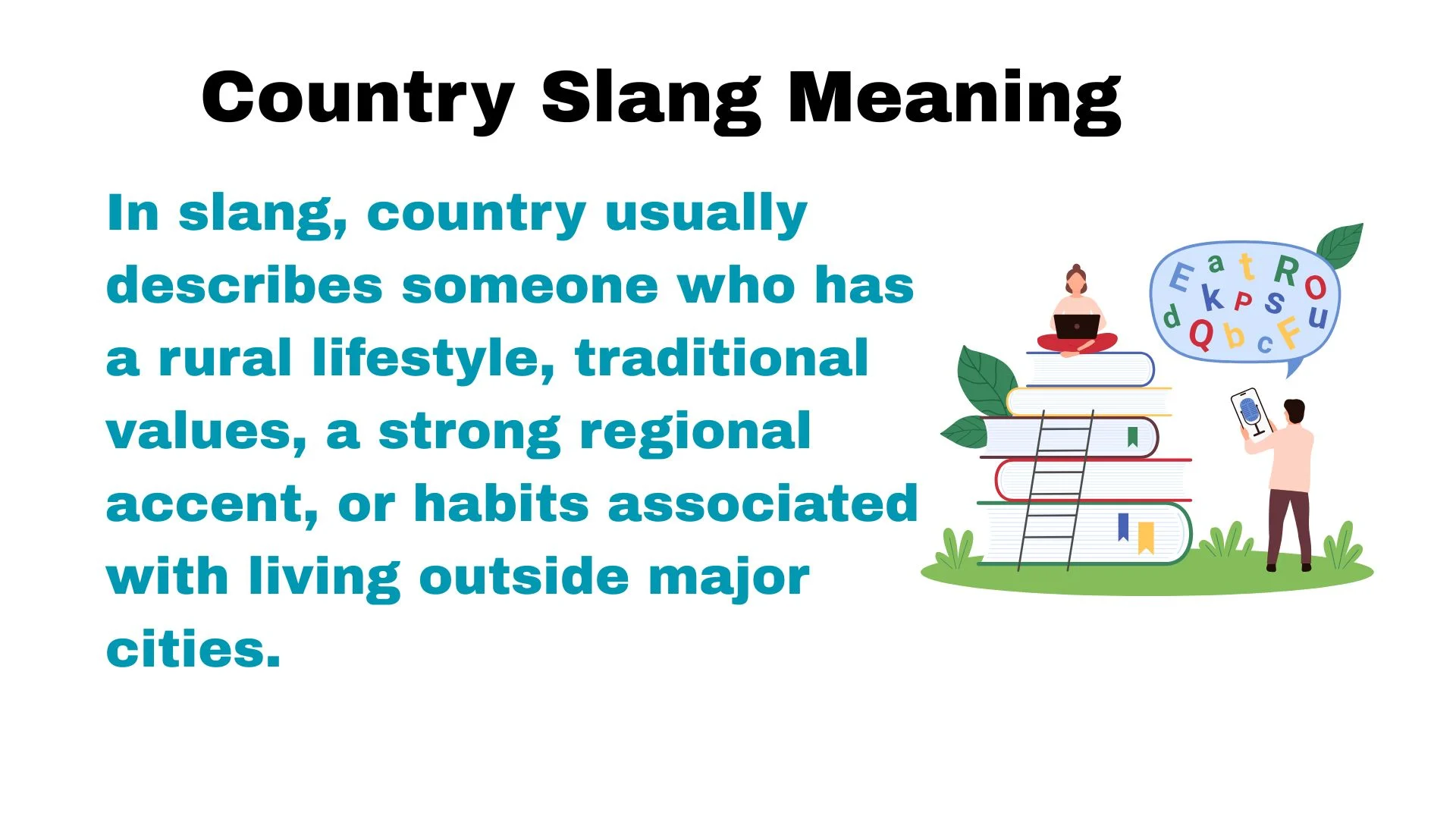
In slang, country usually describes someone who has a rural lifestyle, traditional values, a strong regional accent, or habits associated with living outside major cities. Depending on the speaker, it can be used as either a compliment or a playful joke.
For example:
- “He’s so country.”
- “She has a country accent.”
- “They’re country, but they’re really friendly.”
In many conversations, calling someone “country” simply means they enjoy outdoor activities, country music, farming, fishing, hunting, or small-town living. It often reflects personality rather than geography.
However, context matters. Among friends, it may be an affectionate description. In other situations, it could be used negatively to imply someone is old-fashioned, unsophisticated, or unfamiliar with urban culture. Because of these differences, it is important to consider the speaker’s tone before interpreting the meaning.
Unlike formal definitions found in dictionaries, slang meanings evolve through everyday conversations and internet culture.
Background
The slang use of country developed naturally in English-speaking communities, especially in the United States, where there has long been a cultural distinction between urban and rural lifestyles. Over time, the word became more than a geographic description and started representing identity, personality, fashion, music preferences, and lifestyle.
Country music, Southern culture, cowboy traditions, and farming communities have all influenced how the word is used today. Television shows, movies, and social media creators have further popularized the expression.
Today, younger generations often use “country” humorously in memes and videos to describe someone wearing cowboy boots, driving a pickup truck, speaking with a Southern accent, or enjoying rural traditions.
Although the meaning has expanded, the original connection to rural culture remains the foundation of the slang.
Usage in Different Contexts (Chat, Social Media, Professional Fields)
The meaning of country changes depending on where it appears.
Chat
Friends may use it casually:
- “You’re so country.”
- “That outfit looks country.”
The tone is usually playful or descriptive.
Social Media
On platforms like TikTok and Instagram, users often use the word alongside videos featuring:
- Country music
- Farm life
- Rodeos
- Cowboy fashion
- Southern humor
- Outdoor adventures
Hashtags frequently connect the word with rural lifestyles rather than nationality.
Professional Fields
In business or government documents, country almost always keeps its formal meaning, referring to a nation or geographic region.
Examples include:
- Country code
- Country regulations
- Country manager
- Country office
Here, it has no slang meaning.
Meaning in Chat, WhatsApp, Instagram, TikTok
Digital communication has made slang more flexible than ever.
Friends may call each other “country” after hearing a voice note with a rural accent or discussing farm life.
Captions such as “Country vibes” or “Country living” often celebrate outdoor lifestyles, nature, and traditional values.
TikTok
TikTok creators frequently use “country” in videos featuring:
- Line dancing
- Country songs
- Cowboy hats
- Trucks
- Horses
- Rural comedy
The slang is usually positive and connected with authenticity or a relaxed lifestyle.
Online Messaging
Someone might jokingly say:
“You’re too country for the city.”
The phrase usually refers to personality rather than location.
Meaning in Physics, Medical, and Aircraft Terminology
Unlike internet slang, technical fields generally do not use country as specialized terminology.
Physics
There is no recognized physics definition of “country” beyond referring to the nation where research takes place.
Medical
Medical professionals use the word only to indicate geographic information, such as:
- Country of origin
- Country-specific diseases
- Country healthcare systems
It is not a medical abbreviation.
Aircraft
In aviation, country commonly refers to:
- Country of registration
- Country of manufacture
- Country code
- Country airspace
Again, it carries its standard geographic meaning rather than slang.
Common Misconceptions
Several misunderstandings surround the slang use of country.
One misconception is that calling someone “country” always insults them. In reality, many people proudly identify with rural culture and appreciate the description.
Another misconception is that it only refers to farmers. The slang can describe anyone who embraces country music, outdoor activities, or traditional lifestyles.
Some also believe it always refers to nationality. In everyday slang, it usually describes personality or lifestyle instead.
Understanding the context prevents confusion.
Similar Terms & Alternatives
Several expressions have meanings similar to country depending on the conversation.
Common alternatives include:
- Rural
- Southern
- Cowboy
- Western
- Small-town
- Farm-life
- Down-to-earth
- Rustic
- Hillbilly (can be offensive)
- Redneck (often controversial and context-dependent)
Not all of these words are interchangeable, and some may carry stronger or more negative connotations.
How to Respond to It
If someone calls you “country,” your response depends on their intention.
If it is a compliment, you might reply:
- “Thanks! I love country life.”
- “That’s just who I am.”
If they’re joking:
- “I’ll take that as a compliment.”
- “Nothing wrong with being country.”
If you’re unsure what they mean, politely ask:
- “What do you mean by country?”
Clarifying the context helps avoid misunderstandings.
Differences from Similar Words
Although related, several words have different meanings.
Country often refers broadly to rural culture or lifestyle.
Rural is a neutral geographic description.
Cowboy usually refers to ranching culture or Western fashion.
Southern identifies a regional culture rather than rural living.
Redneck and hillbilly can be offensive depending on who uses them and the situation.
Recognizing these differences helps choose respectful language.
Relevance in Online Conversations & Dating Apps
The country slang meaning appears frequently on dating apps and social platforms because people often describe their personalities through lifestyle.
Dating profiles may include phrases like:
- “Country guy.”
- “Country girl.”
- “Love country music.”
- “Looking for country vibes.”
These descriptions usually communicate interests, values, hobbies, and preferred lifestyles rather than geographic location.
In online conversations, using “country” can help express authenticity, simplicity, and appreciation for rural traditions. However, readers should always interpret the word according to the surrounding conversation rather than assuming a single universal meaning.
Conclusion
The country slang meaning goes far beyond its traditional dictionary definition. In modern conversations, it often describes a person’s lifestyle, personality, cultural background, or appreciation for rural traditions instead of simply identifying where they live. Social media platforms, messaging apps, and online communities have expanded its usage, making context more important than ever.
Whether you encounter the word in chat, on TikTok, Instagram, WhatsApp, or even in dating profiles, understanding the intended meaning helps prevent confusion. At the same time, professional fields such as medicine, physics, and aviation continue using the standard geographic definition. By paying attention to tone, audience, and context, you can confidently understand and use the term in both casual and formal conversations.