The mate slang meaning is one of the most searched language topics because the word “mate” appears in everyday conversations, text messages, movies, gaming, and social media. While it often refers to a friend or companion, its meaning can change depending on the country, context, and tone of the conversation.
People frequently encounter the word on platforms like WhatsApp, Instagram, TikTok, and online forums, making them curious about its actual meaning.
In countries such as the United Kingdom, Australia, and New Zealand, “mate” is a common and friendly way to address someone. However, in other situations, it may have technical meanings in fields like physics, medicine, and aviation. Understanding these different uses helps avoid confusion and improves communication both online and offline.
This guide explains the mate slang meaning, its origin, practical uses, technical definitions, and how it compares with similar expressions.
Meaning & Definition
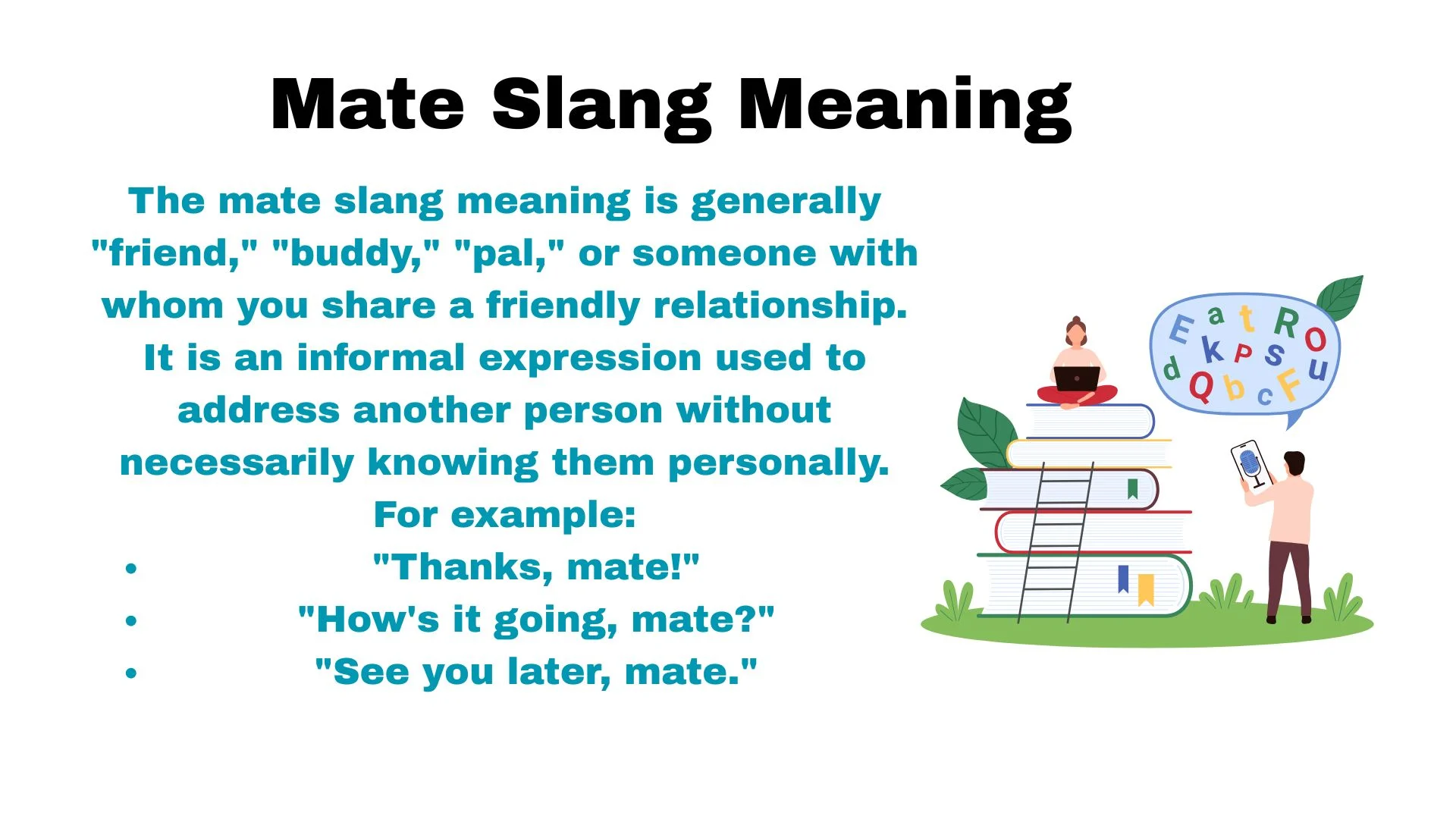
The mate slang meaning is generally “friend,” “buddy,” “pal,” or someone with whom you share a friendly relationship. It is an informal expression used to address another person without necessarily knowing them personally.
For example:
- “Thanks, mate!”
- “How’s it going, mate?”
- “See you later, mate.”
The word creates a casual and welcoming tone. It is especially common in British and Australian English, where even strangers may use it politely.
Depending on tone, the same word can sound warm, sarcastic, respectful, or even slightly confrontational.
For instance:
- Friendly: “You’re a legend, mate!”
- Sarcastic: “Nice job, mate.”
- Polite: “Excuse me, mate.”
The intended meaning usually depends on facial expressions, voice, and the situation.
Background
The history of “mate” goes back hundreds of years. It originates from the Middle Dutch word mate, meaning companion or partner. Over time, English speakers adopted the word to describe someone who shared work, travel, or friendship.
Sailors frequently used “shipmate” to describe fellow crew members. Later, the term expanded into everyday language.
Today, the word is deeply connected with cultures in:
- United Kingdom
- Australia
- New Zealand
- Ireland
- South Africa
In Australia especially, calling someone “mate” reflects equality, friendliness, and mutual respect. It has become an important part of everyday speech and cultural identity.
Usage in Different Contexts (Chat, Social Media, Professional Fields)
The mate slang meaning changes slightly depending on where it is used.
Chat
Friends commonly say:
- “Cheers, mate.”
- “Good game, mate.”
It creates a relaxed atmosphere.
Social Media
On Facebook, X, Reddit, or Discord, users often reply with:
- “Nice one, mate.”
- “Thanks, mate.”
It shows appreciation or agreement.
Professional Fields
In workplaces, “mate” is acceptable in casual environments, especially in Australia or the UK. However, many formal offices prefer names or professional titles instead.
Examples:
- Construction sites
- Sports teams
- Workshops
- Military settings (informally)
In highly formal settings, the word may sound too casual.
Meaning in Chat, WhatsApp, Instagram, TikTok
On modern social media, mate slang meaning usually stays friendly but may carry different emotions depending on context.
People often text:
- “Morning, mate.”
- “Thanks, mate.”
It simply means friend.
Users comment:
- “Looking good, mate.”
- “Great photo, mate.”
This expresses encouragement or appreciation.
TikTok
Creators frequently reply:
- “Cheers, mate.”
- “You’re right, mate.”
It helps make interactions sound natural and friendly.
Gaming Chats
Gamers regularly use:
- “Nice shot, mate.”
- “GG, mate.”
It promotes teamwork and sportsmanship.
Meaning in Physics, Medical, and Aircraft Terminology
Although most people think of the casual expression, “mate” has technical meanings too.
Physics
In physics, “mate” is generally not a standard scientific term. It occasionally appears informally to describe matching or paired components, but it is not an official physics concept.
Medical
Medical professionals rarely use “mate” as technical terminology. Outside technical language, healthcare workers may casually address colleagues or patients with “mate” in countries where the expression is common.
Aircraft Terminology
In aviation and engineering, mating refers to joining two parts together.
Examples include:
- Mating surfaces
- Mating connectors
- Mating components
Here, the word has nothing to do with friendship. Instead, it describes two parts designed to fit together correctly.
Common Misconceptions
Many people misunderstand the mate slang meaning.
Some believe:
- It always means “best friend.”
- It is only used in Australia.
- It is always polite.
- It has romantic meaning.
In reality, the word can describe a stranger, coworker, acquaintance, teammate, or close friend.
Tone is far more important than the word itself.
Similar Terms & Alternatives
Depending on location, similar expressions include:
- Buddy
- Pal
- Bro
- Dude
- Friend
- Buddy boy
- Homie
- Chief
- Boss
- Fam
Each carries a slightly different cultural meaning, but all are informal ways to address someone.
How to Respond to It
If someone calls you “mate,” you can respond naturally.
Examples include:
- “Thanks, mate.”
- “Cheers!”
- “No worries.”
- “You too!”
- “Appreciate it.”
- “Glad to help.”
There is no special response required. Simply reply politely based on the conversation.
Differences from Similar Words
Although “mate,” “buddy,” “bro,” and “pal” all describe friendly relationships, they are not identical.
- Mate is common in British and Australian English.
- Buddy is more common in North America.
- Bro usually refers to a close male friend.
- Pal sounds friendly but is less common among younger speakers.
- Friend is universal and suitable in both formal and informal situations.
Choosing the right word often depends on culture and audience.
Relevance in Online Conversations & Dating Apps
The mate slang meaning appears regularly on dating apps, gaming platforms, and social media.
On dating apps, calling someone “mate” may suggest friendliness rather than romance, particularly in British or Australian English. However, interpretation varies depending on individual communication style.
In online communities, the word helps build rapport and creates a relaxed conversational tone. It is commonly used in comments, live streams, multiplayer games, and discussion forums to make interactions feel approachable and respectful.
Conclusion
The mate slang meaning is simple yet versatile. Most commonly, it refers to a friend, companion, or someone addressed in a friendly, informal manner. While it is especially popular in the United Kingdom, Australia, and New Zealand, its use has spread across social media, gaming communities, and online conversations worldwide.
Beyond slang, the word also appears in technical contexts such as aviation and engineering, where it refers to connecting matching components. Understanding the context is the key to interpreting the correct meaning.
If you see “mate” in a text message, on TikTok, during a game, or in technical documentation, recognizing its intended use will help you communicate more confidently and avoid misunderstandings.

I’m Daniel Brooks, a writing expert dedicated to breaking down grammar into clear, practical lessons anyone can understand. I focus on helping you write with precision, confidence, and impact in every sentence. Discover more tips and guides at GrammarVibes.com.