The phrase “zaddy slang meaning” has become one of the most searched modern slang expressions across social media, texting culture, memes, music, and online conversations. People often hear the word “zaddy” on TikTok, Instagram, Twitter, YouTube, or in celebrity discussions and wonder what it truly means.
Although it sounds similar to the word “daddy,” the slang term carries a more stylish, confident, and attractive meaning.
In modern internet culture, language changes quickly. New slang words appear every year, and many become viral because celebrities, influencers, and music artists use them repeatedly. “Zaddy” is one of those trendy expressions that evolved from casual online conversations into a mainstream term recognized worldwide.
This detailed guide explains the complete meaning of “zaddy,” where the slang came from, how people use it online, examples in conversations, cultural impact, social media popularity, and the difference between “zaddy” and “daddy.” Whether you are curious about internet slang, social trends, or modern dating language, this article covers everything in depth.
What Does Zaddy Mean in Slang?
The slang word “zaddy” refers to an attractive, fashionable, confident, and often mature man who appears charismatic and stylish. A zaddy is usually someone who carries himself with confidence, looks polished, and naturally attracts attention.
Unlike ordinary compliments, “zaddy” suggests a combination of:
- Physical attractiveness
- Confidence
- Fashion sense
- Charm
- Mature energy
- Cool personality
- Leadership or dominance vibes
When someone says, “He’s such a zaddy,” they usually mean the man looks extremely attractive in a confident and sophisticated way.
The term is often used playfully or flirtatiously online.
Simple Definition of Zaddy
A “zaddy” is:
A stylish, attractive, self-confident man with charm and strong presence.
The word usually describes someone who appears older or mature, but age is not always required.
Origin of the Word Zaddy
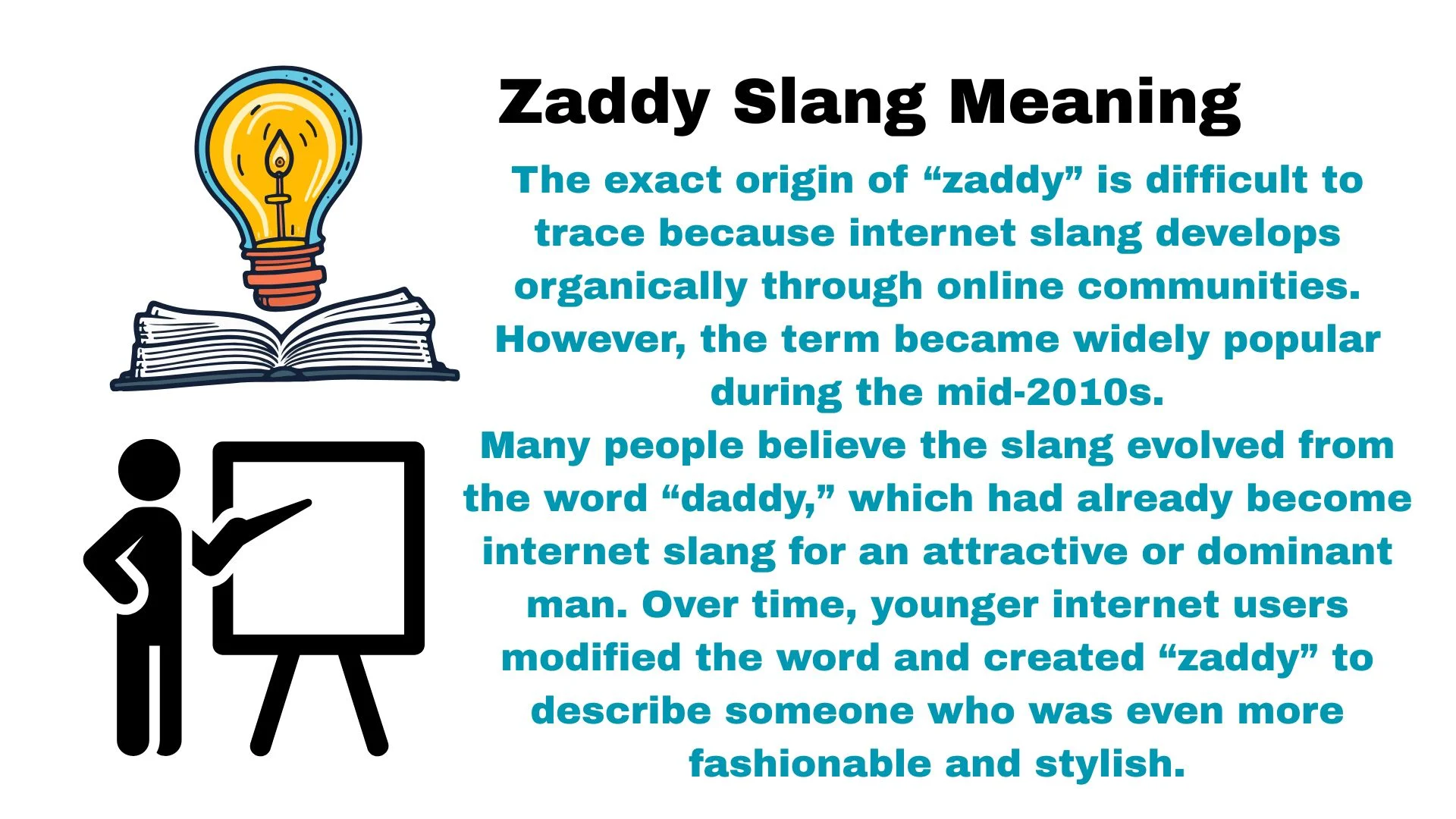
The exact origin of “zaddy” is difficult to trace because internet slang develops organically through online communities. However, the term became widely popular during the mid-2010s.
Many people believe the slang evolved from the word “daddy,” which had already become internet slang for an attractive or dominant man. Over time, younger internet users modified the word and created “zaddy” to describe someone who was even more fashionable and stylish.
Social media platforms like:
- TikTok
- Tumblr
helped spread the term globally.
The slang gained additional popularity through celebrities and musicians. Some fans began calling famous male celebrities “zaddies” because of their confidence, appearance, and charisma.
Why Is the Word Zaddy So Popular?
The popularity of “zaddy” comes from internet culture’s obsession with aesthetics, confidence, and personality.
Modern social media encourages people to admire:
- Fashion
- Confidence
- Lifestyle
- Physical appearance
- Luxury aesthetics
- Celebrity culture
The term perfectly combines all these qualities into one catchy slang word.
Another reason for its popularity is humor. Many people use “zaddy” jokingly among friends or online communities.
For example:
- “Pedro Pascal is everyone’s favorite zaddy.”
- “That guy walked in dressed like a complete zaddy.”
- “Your boyfriend turned into a zaddy after that haircut.”
The word sounds trendy, playful, and flattering at the same time.
Difference Between Zaddy and Daddy
Many people confuse “zaddy” with “daddy,” but the meanings are slightly different.
Daddy
“Daddy” slang usually refers to:
- A dominant or attractive man
- Someone admired romantically
- A person with authority or confidence
The term may sometimes carry flirtatious or mature relationship meanings.
Zaddy
“Zaddy” focuses more on:
- Style
- Fashion
- Physical attractiveness
- Sophisticated confidence
- Charisma
- Social presence
In simple words:
Every zaddy may be a daddy, but not every daddy is a zaddy.
A man becomes a “zaddy” when he combines attractiveness with elegance, confidence, and strong personal style.
How People Use Zaddy on Social Media
The term appears constantly across modern platforms.
TikTok Usage
TikTok creators often use “zaddy” in:
- Fashion videos
- Celebrity edits
- Glow-up transformations
- Relationship content
- Funny memes
Example:
“My husband looked like a total zaddy at dinner tonight.”
Instagram Usage
Instagram captions commonly include the word when posting stylish or attractive male photos.
Example:
“Serving zaddy energy today.”
Twitter/X Usage
Twitter users often discuss celebrities using the slang.
Example:
“Oscar Isaac has ultimate zaddy vibes.”
Examples of Zaddy in Conversations
Understanding slang becomes easier with examples.
Example 1
Person A: “Who’s that guy in the black suit?”
Person B: “No idea, but he looks like a total zaddy.”
Example 2
“She called her boyfriend a zaddy after he bought a luxury watch.”
Example 3
“That beard and confidence really give him zaddy energy.”
Example 4
“People online say older actors age into zaddies.”
Celebrity Zaddy Culture
Celebrities strongly influenced the spread of the slang term.
Fans frequently describe actors, singers, and athletes as “zaddies” because they appear stylish and confident.
Common celebrity traits associated with zaddy culture include:
- Tailored fashion
- Groomed appearance
- Deep voice
- Calm confidence
- Mature attractiveness
- Masculine elegance
Actors such as Pedro Pascal, Idris Elba, and Oscar Isaac are often mentioned online in “zaddy” discussions.
Zaddy Meaning in Dating Culture
In dating culture, “zaddy” usually describes someone highly attractive and emotionally confident.
People may use the term when discussing:
- Romantic attraction
- Crushes
- Celebrity admiration
- Mature partners
- Stylish men
The slang often implies emotional security and confidence, not just physical looks.
Someone described as a “zaddy” may appear:
- Responsible
- Protective
- Sophisticated
- Calm under pressure
- Financially stable
- Fashionable
Is Zaddy a Compliment?
Yes, “zaddy” is generally considered a compliment.
Calling someone a zaddy usually means:
- They look attractive
- They dress well
- They appear confident
- They have charisma
- They carry mature energy
However, context matters. Sometimes people use it jokingly or sarcastically among friends online.
Can Women Be Called Zaddy?
Traditionally, the slang refers to men. However, internet language constantly evolves.
Some people jokingly use “zaddy” for women who display dominant confidence, stylish energy, or powerful charisma. Still, this usage is less common.
Zaddy in Memes and Internet Humor
Memes helped the word become even more popular.
Internet users create funny content comparing:
- Before and after glow-ups
- Celebrity transformations
- Fashion upgrades
- Beard styles
- Older actors becoming more attractive with age
The term became part of modern meme culture because it sounds playful and dramatic.
Why Younger Generations Use Slang Like Zaddy
Generation Z and younger millennials often invent slang to create identity and humor online.
Words like “zaddy” spread quickly because they are:
- Funny
- Short
- Easy to remember
- Expressive
- Social-media friendly
Internet slang also creates shared online culture among users worldwide.
Is Zaddy Used Positively or Negatively?
Most of the time, the term is positive.
It usually expresses admiration, attraction, or appreciation for someone’s appearance and confidence.
Negative use is rare unless someone uses it sarcastically.
Final Thoughts
Understanding “zaddy slang meaning” helps explain an important piece of modern internet culture. The word describes more than just attractiveness. It represents confidence, maturity, style, charisma, and social presence combined into one trendy expression.
The slang became popular because online culture values personality, fashion, humor, and visual appeal. Social media platforms transformed “zaddy” from a niche internet phrase into a mainstream compliment used around the world.
If used seriously, flirtatiously, or humorously, the term continues to remain popular in memes, dating conversations, celebrity culture, and everyday online communication.