The slang term “shrink” is one of the most widely recognized informal words in English, especially in conversations about mental health, psychology, therapy, and emotional wellbeing.
People often hear phrases like “I need to see my shrink” in movies, TV shows, social media posts, or casual discussions. Although the word sounds humorous or informal, it has a long cultural history and an interesting connection to psychiatry and psychotherapy.
Today, the word “shrink” is commonly used to refer to a psychiatrist, psychologist, therapist, or counselor. Depending on the context, it can sound friendly, casual, sarcastic, or even outdated. Some people use it affectionately, while others avoid it because they feel it can minimize the seriousness of mental healthcare.
Understanding the slang meaning of “shrink” helps explain not only modern language but also changing attitudes toward therapy and mental health in society. Over time, the term evolved from comedy and pop culture into everyday speech.
Even though professional mental health terminology is more common now, “shrink” still appears frequently in entertainment, memes, online discussions, and spoken English.
What Does “Shrink” Mean in Slang?
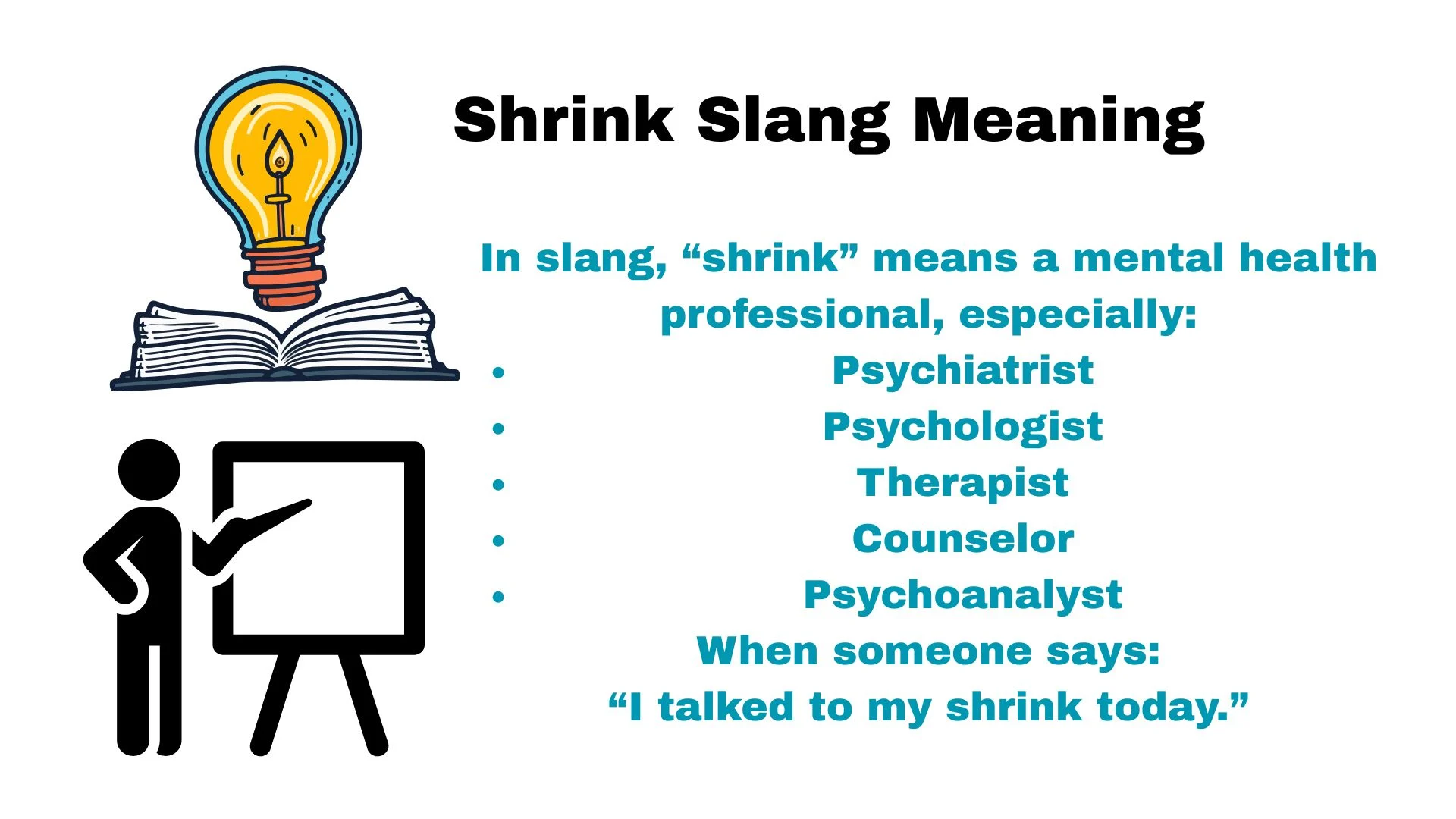
In slang, “shrink” means a mental health professional, especially:
- Psychiatrist
- Psychologist
- Therapist
- Counselor
- Psychoanalyst
When someone says:
“I talked to my shrink today.”
they usually mean they had a therapy session or mental health appointment.
The word is informal and conversational. It is not normally used in professional medical writing or official healthcare communication.
Simple Definition
A “shrink” is:
A casual slang word for someone who helps people with emotional, mental, or psychological problems.
Why Is a Therapist Called a “Shrink”?
The slang term comes from the older expression:
“Headshrinker”
This phrase appeared in the early 20th century and was based on the idea that psychiatrists or psychoanalysts were trying to “shrink” a person’s mind, ego, fears, or mental problems by analyzing them deeply.
Another explanation connects the word to the cultural fascination with “shrunken heads” from tribal practices that were misunderstood and sensationalized in Western media. Over time, “headshrinker” became shortened to simply:
“Shrink”
By the 1960s and 1970s, the word became popular in movies, comedy shows, and urban slang.
The Evolution of the Word “Shrink”
Language changes with culture, and the word “shrink” evolved alongside society’s understanding of mental health.
Early Usage
Initially, therapy and psychiatry were mysterious subjects to many people. Mental health treatment often carried stigma, and therapists were viewed as strange or overly analytical figures.
As a result, slang terms developed, including:
- Head doctor
- Shrink
- Headshrinker
- Brain doctor
These expressions were sometimes mocking but also reflected public curiosity.
Modern Usage
Today, mental health awareness is much more accepted. Many people openly discuss therapy, anxiety, depression, stress, and emotional wellness.
Because of this shift:
- Some people still use “shrink” casually
- Others prefer respectful terms like therapist or counselor
- Younger generations may use the term jokingly online
The meaning remains widely understood across English-speaking countries.
Is “Shrink” Offensive?
This depends on the situation and personal preference.
When It Is Acceptable
Many people use “shrink” casually among friends without intending disrespect.
Example:
“My shrink helped me deal with stress.”
In this context, the word sounds informal but not necessarily rude.
When It Can Sound Negative
Some mental health professionals dislike the term because it may:
- Sound dismissive
- Reduce professional credibility
- Reinforce old stereotypes about therapy
In formal settings, it is better to say:
- Therapist
- Psychologist
- Psychiatrist
- Mental health counselor
Difference Between a Shrink, Therapist, and Psychiatrist
People often use these words interchangeably, but they are not exactly the same.
Psychiatrist
A psychiatrist is a medical doctor who can:
- Diagnose mental illnesses
- Prescribe medication
- Provide treatment plans
Psychologist
A psychologist studies human behavior and emotions and often provides therapy but usually cannot prescribe medication in most countries.
Therapist
A therapist is a broad term for professionals who help people emotionally or psychologically.
Shrink
“Shrink” is simply an informal slang term that may refer to any of the above.
Common Examples of “Shrink” in Sentences
Here are examples showing how the slang is used naturally.
Casual Conversation
“My shrink says I need better sleep habits.”
Humor
“After this week, everyone needs a shrink.”
Movies and TV
“He’s been seeing a shrink since the accident.”
Online Slang
“TikTok is basically free therapy until you get a real shrink.”
“Shrink” in Pop Culture
The word became extremely popular through entertainment.
Movies
Hollywood films often portrayed psychiatrists as intellectual problem-solvers or comedic characters. This helped spread the term globally.
Television
Shows about family drama, crime, and psychology frequently used the slang casually.
Comedy
Stand-up comedians often joke about visiting a shrink for relationship or stress problems.
Social Media
Modern memes and online humor still use the word frequently, especially when discussing anxiety, overthinking, or emotional burnout.
Psychological Meaning Behind the Slang
Interestingly, the popularity of the word “shrink” reveals cultural attitudes about mental health.
In the past:
- Therapy was secretive
- People feared judgment
- Mental illness carried heavy stigma
Using slang made the subject feel less serious or uncomfortable.
Today:
- Therapy is normalized
- Emotional wellbeing is openly discussed
- More people seek professional help
As society changes, slang evolves too.
Similar Slang Words Related to Mental Health
Other informal words connected to therapy include:
Head Doctor
Old-fashioned slang for psychiatrist.
Couch Doctor
Refers to psychoanalysts because patients traditionally lay on couches during sessions.
Analyst
Short form for psychoanalyst.
Therapist
Not slang, but commonly used casually.
How the Internet Changed the Meaning
The internet transformed how people discuss mental health.
Platforms like:
- TikTok
- YouTube
encouraged open conversations about:
- Anxiety
- Trauma
- Stress
- Relationships
- Depression
As a result, terms like “shrink” became less taboo and more conversational.
Memes often use humor to discuss therapy experiences, making mental health discussions feel more approachable.
Should You Use the Word “Shrink”?
It depends on the audience and context.
Appropriate Situations
- Informal conversation
- Humor among friends
- Entertainment discussion
- Casual storytelling
Better Alternatives for Professional Settings
- Therapist
- Counselor
- Psychiatrist
- Psychologist
Using professional titles shows greater respect and clarity.
Why People Search for “Shrink Slang Meaning”
People search this phrase for several reasons:
Curiosity After Hearing It
Many first hear the word in films or TV shows.
Understanding Slang
English learners often want to know whether the term is rude or friendly.
Mental Health Discussions
As therapy becomes more common, people encounter the slang more frequently online.
Pop Culture References
Movies, memes, and podcasts continue to popularize the expression.
Final Thoughts
The slang word “shrink” has survived for decades because it combines humor, culture, and psychology in a single informal expression. While it originally carried more negative or mocking undertones, modern usage is often casual and harmless.
Still, context matters. In professional environments, respectful terms like therapist or psychiatrist are usually preferred. In everyday conversation, however, “shrink” remains a recognizable part of modern English slang.
The evolution of the word also reflects society’s changing relationship with mental health. What was once considered taboo is now openly discussed across social media, workplaces, schools, and families. Because of that shift, slang surrounding therapy has become more mainstream and less stigmatized.
Understanding words like “shrink” helps people better navigate modern language, online culture, and conversations about emotional wellbeing.

I’m Daniel Brooks, a writing expert dedicated to breaking down grammar into clear, practical lessons anyone can understand. I focus on helping you write with precision, confidence, and impact in every sentence. Discover more tips and guides at GrammarVibes.com.