The phrase tea slang meaning has become increasingly popular, especially across social media platforms like TikTok, Instagram, and Twitter. If you’ve ever seen someone say “spill the tea” or “that’s the tea,” you might have wondered what it actually means and why it’s used so often.
People search for this term to better understand online conversations, decode slang, and stay updated with modern language trends.
In simple terms, “tea” in slang refers to gossip, truth, or interesting information—often something juicy or dramatic. It’s widely used in casual chats, memes, and even pop culture discussions.
However, the meaning can shift slightly depending on context, which makes it even more intriguing. This article breaks down everything you need to know, from its origins to its use in everyday communication and even how it differs from similar expressions.
Meaning & Definition
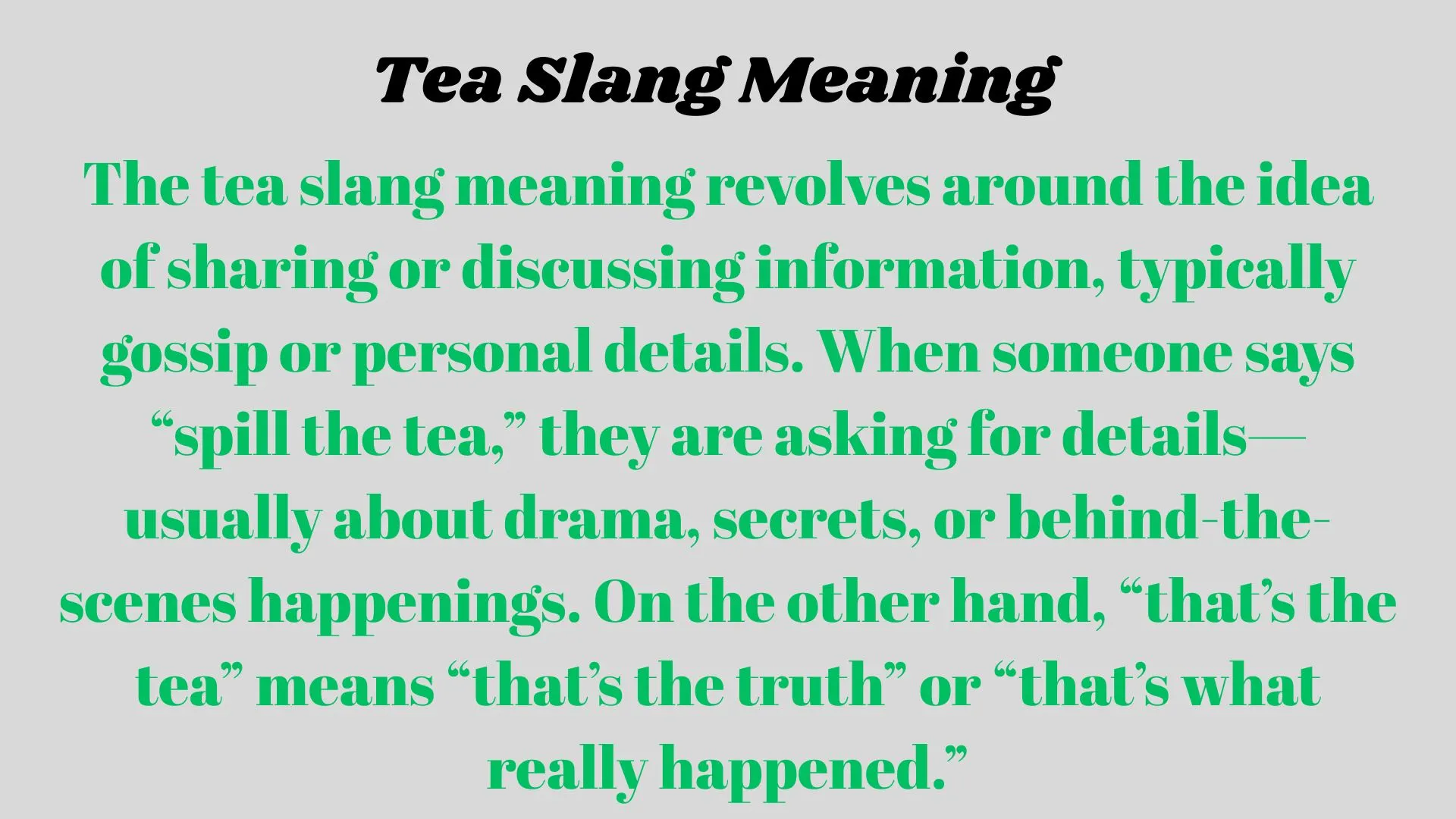
The tea slang meaning revolves around the idea of sharing or discussing information, typically gossip or personal details. When someone says “spill the tea,” they are asking for details—usually about drama, secrets, or behind-the-scenes happenings. On the other hand, “that’s the tea” means “that’s the truth” or “that’s what really happened.”
The term is informal and often playful, used to make conversations more expressive. It doesn’t always imply negativity; sometimes it simply refers to interesting updates or insider information. For example, if a friend tells you about a recent event or situation, you might respond with curiosity by saying, “Okay, spill the tea!”
It’s important to note that “tea” doesn’t literally relate to the beverage in this context. Instead, it symbolizes information worth sharing. The tone can vary—sometimes lighthearted, sometimes dramatic—but it usually carries a sense of excitement or intrigue.
Overall, the meaning is rooted in communication and storytelling, making it a powerful slang term in modern digital culture.
Background with Examples
The origin of the tea slang meaning can be traced back to African American Vernacular English (AAVE), where “T” or “tea” referred to truth or personal business. It gained wider popularity through drag culture in the United States, especially in the 1990s, and later spread through reality TV shows and online communities.
One of the biggest boosts to its popularity came from shows like RuPaul’s Drag Race, where contestants frequently used phrases like “spill the tea.” Social media then amplified its reach, turning it into a global slang term.
Examples of usage:
- “Girl, spill the tea—what happened at the party?”
- “That’s the tea, whether you like it or not.”
- “I’ve got some tea about that situation.”
In each example, “tea” represents information that others are curious about. The phrase often carries a sense of anticipation, making conversations more engaging.
Over time, the meaning has expanded slightly to include not just gossip but also honest opinions or facts. Despite this evolution, the core idea remains the same: sharing something interesting or revealing.
Usage in Different Contexts (Chat, Social Media, Professional Fields)
The tea slang meaning is most commonly used in casual settings, especially in chats and social media. In texting or messaging apps, it helps add personality and emotion to conversations. For example, friends often use it to encourage storytelling or to react to surprising news.
On social media platforms, “tea” is frequently used in captions, hashtags, and comments. Influencers and content creators use it to attract attention, such as “Spilling the tea on my daily routine” or “Here’s the tea about this trend.” It creates a sense of curiosity and invites engagement.
In professional fields, however, the term is rarely used. It’s considered informal and may not be appropriate in workplace communication unless the environment is very relaxed. Even then, it’s typically limited to casual conversations among colleagues rather than formal emails or presentations.
Understanding where and when to use the term is important. While it can make communication more fun and relatable, using it in the wrong setting may come across as unprofessional.
Meaning in Chat, WhatsApp, Instagram, TikTok
On platforms like WhatsApp, Instagram, and TikTok, the tea slang meaning becomes even more dynamic. Each platform shapes how the term is used and understood.
- WhatsApp/Chat: Often used in personal conversations. Example: “I have some tea to tell you later.”
- Instagram: Common in captions and stories, usually paired with dramatic or exciting content.
- TikTok: Frequently used in storytelling videos, where creators “spill tea” about experiences, trends, or controversies.
On TikTok especially, the phrase has evolved into a content style. Videos labeled as “tea” often promise insider details or personal revelations, making them highly engaging.
In all these platforms, the term adds a layer of excitement and relatability, making it a staple of digital communication.
Meaning in Physics, Medical, and Aircraft Terminology
Interestingly, outside of slang, “tea” has no direct connection to fields like physics, medicine, or aviation. However, similar abbreviations or terms may appear in these areas.
- Physics: “TE” can refer to “Transverse Electric” waves in electromagnetics.
- Medical: “TEA” might stand for “Transesophageal Echocardiography” or “Total Energy Allowance.”
- Aircraft: “TEA” can mean “Triethylaluminum,” a chemical used in certain jet engine ignition systems.
These meanings are entirely unrelated to the slang usage. The similarity lies only in the letters, not in the concept. This highlights how context plays a crucial role in understanding language.
Common Misconceptions
One common misunderstanding about the tea slang meaning is that it always refers to negative gossip. While it can involve drama, it doesn’t have to. It can also mean sharing truthful or interesting information without any negative intent.
Another misconception is that it’s a new term. In reality, it has been around for decades but only recently gained mainstream popularity through social media.
Some people also confuse it with literal tea or assume it has cultural ties to tea-drinking traditions, which is not the case in slang usage.
Similar Terms & Alternatives
Several other slang terms carry meanings similar to “tea,” including:
- Gossip – General sharing of rumors or personal details
- Spill – To reveal information
- Deets (details) – Specific information about something
- Drama – Situations involving conflict or excitement
While these terms overlap, “tea” often feels more playful and culturally specific, especially in online spaces.
How to Respond to It
When someone uses “tea” in conversation, your response depends on the context. If they say “spill the tea,” they’re inviting you to share details. You can respond by telling the story or saying something like, “Okay, here’s what happened…”
If someone says “that’s the tea,” you might agree by saying, “Exactly!” or “True!” It’s a way of acknowledging the truth or confirming information.
Differences from Similar Words
Although “tea” is similar to words like gossip or news, it has a more casual and expressive tone. Gossip can sometimes carry a negative connotation, while “tea” often feels lighter and more मनोरंजक.
Unlike “news,” which is factual and formal, “tea” is informal and often personal. This distinction makes it more suitable for friendly or social interactions.
Relevance in Online Conversations & Dating Apps
The tea slang meaning plays a significant role in online conversations and even dating apps. It helps people connect, share stories, and create engaging interactions. On dating platforms, it can be used humorously to ask about someone’s experiences or opinions.
For example, someone might say, “So, what’s the tea on your last trip?” to spark a conversation. It adds a playful tone and makes interactions feel more relaxed.
Conclusion
Understanding the tea slang meaning is essential for navigating modern communication, especially in digital spaces. From its roots in AAVE and drag culture to its widespread use on social media, the term has evolved into a powerful expression of storytelling and connection.
If you’re chatting with friends, scrolling through TikTok, or engaging on dating apps, knowing how to use and interpret “tea” can make conversations more engaging and meaningful.
While it’s mostly informal, its versatility and popularity make it an important part of contemporary language. By recognizing its context and nuances, you can use it confidently and appropriately in everyday interactions.