If you’ve spent any time on social media or texting friends, you’ve probably come across the term “lowkey.” But what exactly does it mean, and why is it so widely used? The lowkey slang meaning has become a staple in modern communication, especially among younger audiences on platforms like TikTok, Instagram, and WhatsApp. People search for this term because it can be confusing—it seems simple, yet its meaning shifts depending on tone and context.
At its core, “lowkey” adds subtlety to a statement. It can express mild agreement, hidden feelings, or something intentionally understated. Whether someone says “I lowkey like this song” or “That was lowkey embarrassing,” the word softens or downplays the emotion.
Understanding how to use “lowkey” correctly can help you sound more natural in casual conversations and better interpret what others really mean. Let’s break it down in detail.
Meaning & Definition
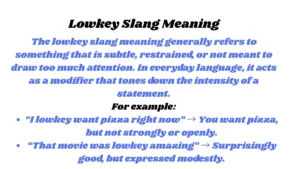
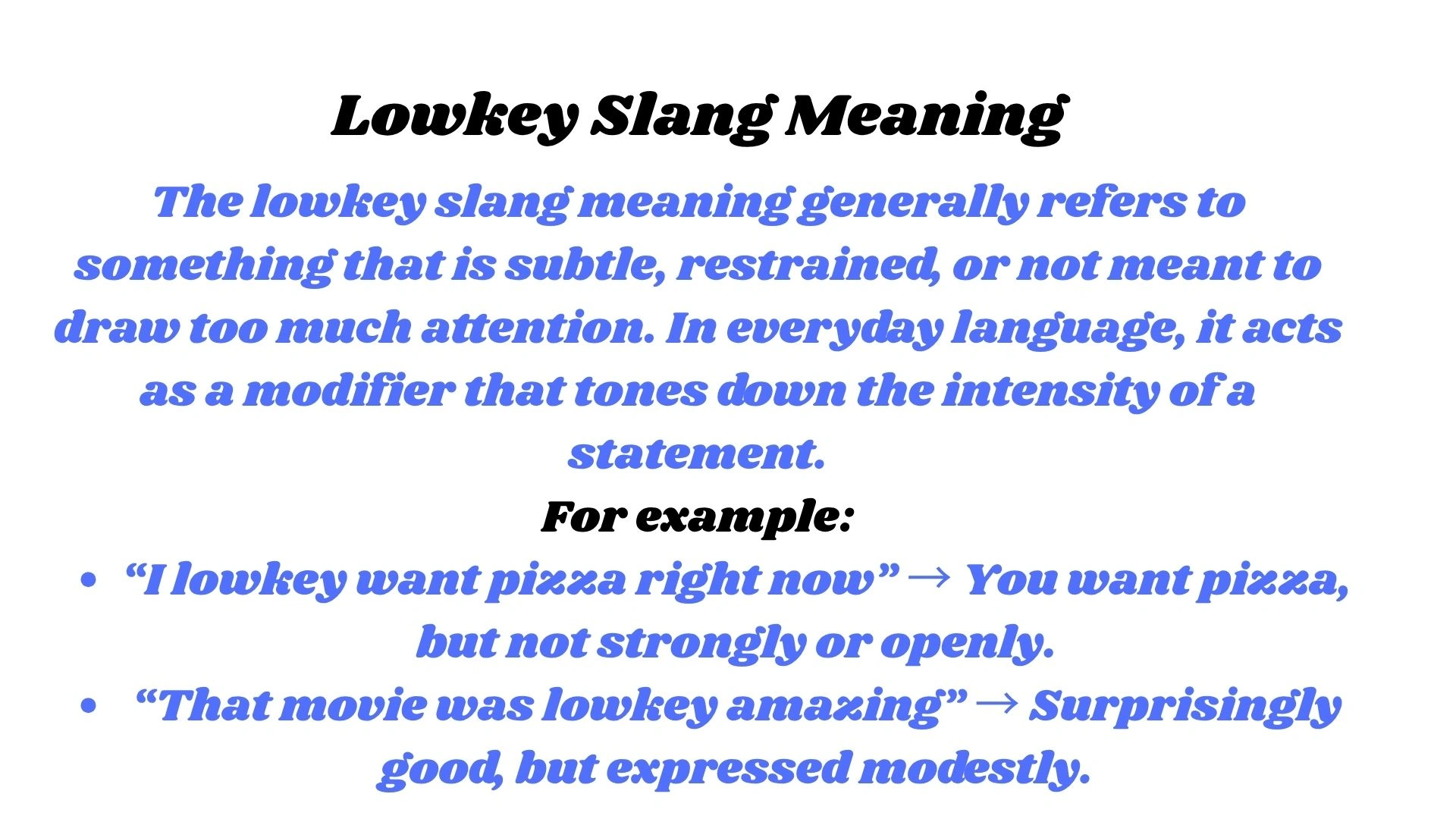
The lowkey slang meaning generally refers to something that is subtle, restrained, or not meant to draw too much attention. In everyday language, it acts as a modifier that tones down the intensity of a statement.
For example:
- “I lowkey want pizza right now” → You want pizza, but not strongly or openly.
- “That movie was lowkey amazing” → Surprisingly good, but expressed modestly.
In slang usage, “lowkey” can imply:
- Slight or moderate feelings
- Hidden or secret emotions
- Understated opinions
- Casual emphasis without exaggeration
Interestingly, it can also suggest the opposite of “highkey,” which means openly or strongly. So while “lowkey” keeps things subtle, “highkey” amplifies them.
Grammatically, “lowkey” is flexible. It can function as an adverb (“lowkey excited”), adjective (“a lowkey vibe”), or even part of a sentence tone.
Overall, the word helps soften statements, making them sound more relaxed, indirect, or even playful. That’s why it has become such a popular addition to everyday speech.
Background
The term “lowkey” originally comes from the phrase “low-key,” which has been used in English for decades. Traditionally, it described something calm, simple, or not intense—like a “low-key event” or a “low-key lifestyle.”
Over time, especially with the rise of internet culture, the spelling shifted to “lowkey” (without the hyphen), and its meaning evolved into slang. Social media platforms like Twitter, TikTok, and Instagram played a major role in spreading it globally.
The transformation happened because users began using “lowkey” to express emotions more subtly. Instead of saying “I really like this,” people preferred “I lowkey like this,” which sounds more casual and less intense.
Here are a few examples showing its evolution:
- Traditional: “We had a low-key dinner.” (simple, calm)
- Slang: “I lowkey enjoyed that.” (mild or hidden feeling)
This shift reflects modern communication trends—people often prefer indirect, toned-down expressions rather than bold or dramatic ones. The slang version adds personality, nuance, and relatability to conversations.
Today, “lowkey” is widely used across cultures and age groups, though it remains most popular among Gen Z and millennials.
Usage in Different Contexts
The lowkey slang meaning changes slightly depending on where and how it’s used. In casual chats, it’s incredibly common and helps convey relaxed or subtle emotions.
Chat & Everyday Conversations
In texting or talking with friends, “lowkey” softens statements:
- “I lowkey miss school days”
- “That was lowkey funny”
It keeps the tone informal and less intense.
Social Media
On platforms like Instagram or Twitter:
- “Lowkey obsessed with this outfit”
- “This song is lowkey a hit”
Here, it often adds personality and relatability.
Professional Settings
In professional communication, “lowkey” is rarely appropriate. It may appear in creative industries or casual team chats, but formal environments prefer clearer, direct language.
Emotional Expression
“Lowkey” is often used to hide vulnerability:
- “I lowkey care about this”
This allows people to express feelings without sounding too serious.
Overall, its usage depends heavily on tone, audience, and platform.
Meaning in Chat, WhatsApp, Instagram, TikTok
On messaging apps and social platforms, the lowkey slang meaning becomes even more dynamic.
- WhatsApp/Chat:
Used casually to express mild opinions or feelings.
Example: “I lowkey think you’re right.” - Instagram:
Often appears in captions to sound cool or understated.
Example: “Lowkey loving this vibe.” - TikTok:
Frequently used in trends, comments, and humor.
Example: “This is lowkey me every day 😂”
In these spaces, “lowkey” helps people avoid sounding too intense while still sharing thoughts or emotions. It also adds a layer of humor or relatability.
Meaning in Physics, Medical, and Aircraft Terminology
Interestingly, the lowkey slang meaning does not directly apply in technical fields like physics, medicine, or aviation.
- Physics: No recognized term “lowkey.” However, “low key” may loosely describe low intensity in informal explanations.
- Medical: Not a standard term. Professionals use precise language instead.
- Aircraft/Aviation: “Low-key” could informally describe low-profile operations, but it’s not official terminology.
So, while “lowkey” thrives in casual language, it has no formal meaning in technical or scientific contexts.
Common Misconceptions
Many people misunderstand the lowkey slang meaning. Here are a few common mistakes:
- It always means “secret” → Not always; it can just mean “slightly.”
- It weakens statements completely → Sometimes it actually emphasizes subtly.
- It’s always negative → It can be positive, neutral, or negative.
Understanding context is key to interpreting it correctly.
Similar Terms & Alternatives
Some alternatives to “lowkey” include:
- Slightly
- Kind of
- A bit
- Secretly
- Subtly
Each has a slightly different tone, but all can replace “lowkey” depending on the situation.
How to Respond to It
When someone uses “lowkey,” your response depends on context:
- Agreement: “Yeah, same here!”
- Curiosity: “Lowkey? Why not fully?”
- Humor: “Only lowkey? Not highkey?”
It often invites a relaxed, conversational reply.
Differences from Similar Words
- Lowkey vs Highkey: Subtle vs obvious
- Lowkey vs Slightly: More emotional nuance
- Lowkey vs Secretly: Not always hidden, just toned down
These differences help clarify intent in conversations.
Relevance in Online Conversations & Dating Apps
The lowkey slang meaning is especially relevant in dating and online interactions. It allows people to express interest without sounding too forward:
- “I lowkey want to see you again”
- “I lowkey like your vibe”
This makes communication feel safer and less intense, which is why it’s so popular in modern digital relationships.
Conclusion
The lowkey slang meaning has evolved into a powerful yet subtle tool in everyday communication. It helps people express thoughts, feelings, and opinions in a relaxed, understated way without sounding too direct or intense.
From texting and social media to dating apps, “lowkey” adds nuance and personality to conversations.
While it originated from the traditional term “low-key,” its slang version has taken on a more emotional and flexible role. It can signal mild interest, hidden feelings, or simply soften a statement. However, it’s important to use it appropriately—mainly in casual settings rather than professional or technical contexts.
Understanding how and when to use “lowkey” not only improves your communication but also helps you better interpret modern language trends. As digital communication continues to evolve, terms like “lowkey” show how language adapts to express subtle human emotions more effectively.

I’m Daniel Brooks, a writing expert dedicated to breaking down grammar into clear, practical lessons anyone can understand. I focus on helping you write with precision, confidence, and impact in every sentence. Discover more tips and guides at GrammarVibes.com.