The term mota slang meaning is something many internet users search for because the word “mota” can have different meanings depending on the language, culture, and context in which it is used.
While some people encounter it in text messages, social media posts, or online chats, others may hear it in regional conversations or specialized fields. This variety often creates confusion, leading people to wonder what the term actually means.
In online communication, slang words evolve quickly and can carry different interpretations across platforms such as WhatsApp, Instagram, TikTok, and dating apps. Understanding the intended meaning requires paying attention to context, location, and the people involved in the conversation.
This guide explores the mota slang meaning, its background, common uses, possible interpretations in different fields, and how it compares with similar terms. By the end, you’ll have a clear understanding of when and how the word is used.
Meaning & Definition of Mota
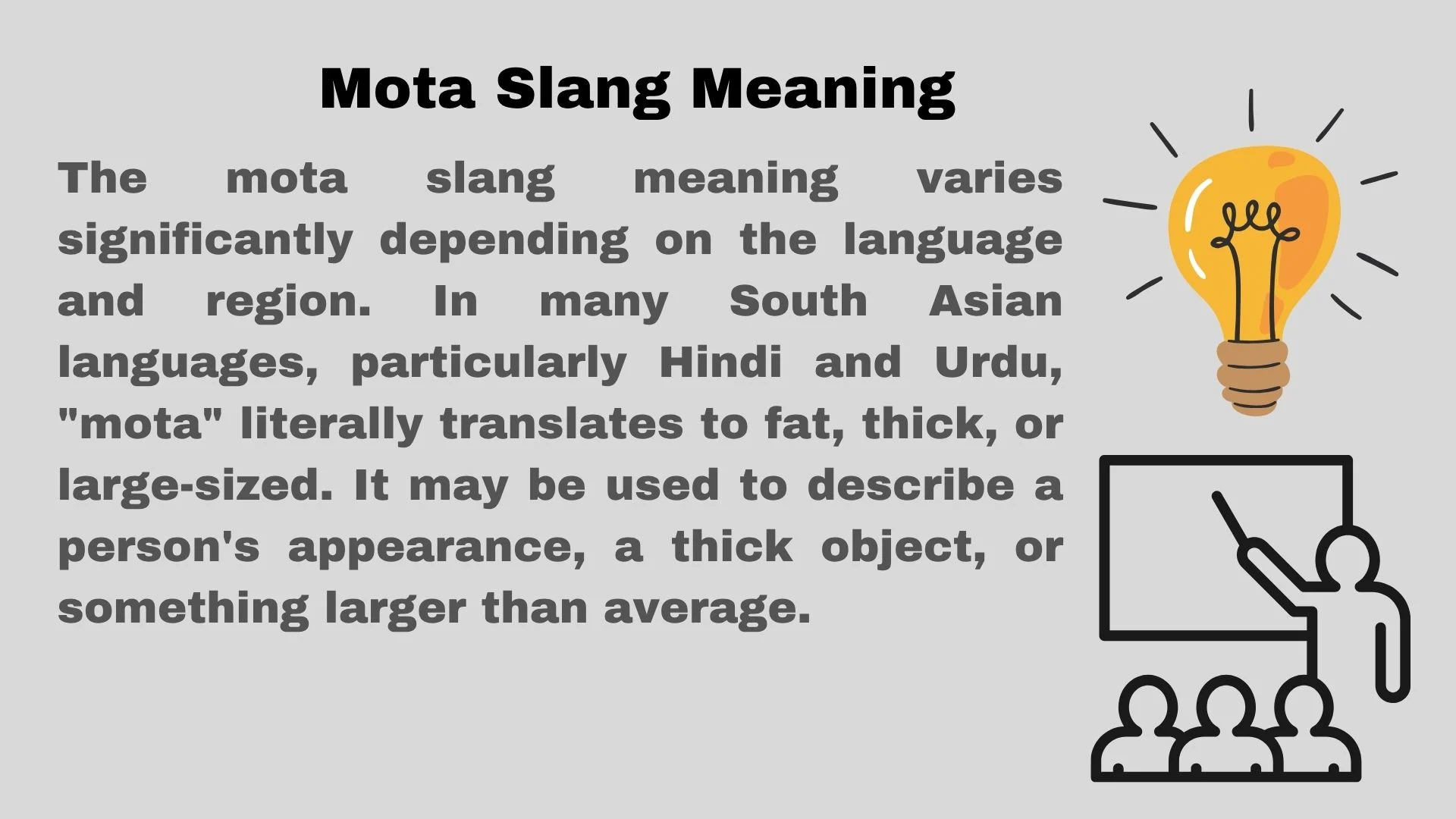
The mota slang meaning varies significantly depending on the language and region. In many South Asian languages, particularly Hindi and Urdu, “mota” literally translates to fat, thick, or large-sized. It may be used to describe a person’s appearance, a thick object, or something larger than average.
In slang usage, the term can be used playfully among friends as a nickname. For example:
- “Hey mota, where are you going?”
- “That mota guy won the race.”
Depending on tone and relationship, the word can be friendly, humorous, or insulting.
In some online communities, “mota” may also refer to something big, significant, or impressive. The exact interpretation depends on the conversation and cultural background of the speaker.
Because slang evolves constantly, users should avoid assuming a single meaning. Always consider who is using the term and in what context.
Background of the Word Mota
The word has roots in several Indo-Aryan languages, where it has traditionally been used as an adjective describing size or body shape. Over time, everyday speech transformed it into a nickname and slang expression.
Like many slang terms, its popularity spread through:
- Social media platforms
- Online gaming communities
- Messaging apps
- Memes and viral content
As internet communication expanded globally, words from regional languages began appearing in international conversations. Users unfamiliar with the original language often searched for definitions after encountering the term online.
The meaning may differ from one country to another. In some places it is harmless and affectionate, while in others it can be considered rude if directed at someone’s appearance.
This cultural flexibility explains why the term generates frequent online searches and discussions.
Usage in Different Contexts
The way “mota” is used changes according to the environment.
Casual Conversations
Friends may use it as a nickname:
- “What’s up, mota?”
- “Come here, mota!”
Social Media
Users sometimes include it in captions, memes, and humorous comments.
Example:
- “Mota energy today.”
Gaming Communities
Gamers occasionally use the word to describe a large character, powerful item, or strong opponent.
Professional Settings
In professional communication, the term is generally avoided because it can be interpreted as a comment about someone’s physical appearance.
Cultural Usage
In some communities, family members use the term affectionately without any negative intention. Context and familiarity remain important factors.
Mota Meaning in Chat, WhatsApp, Instagram, and TikTok
Social media has given the term new life and broader exposure.
On WhatsApp, “mota” often appears as a nickname among close friends or relatives.
Example:
- “Mota, call me when you reach home.”
Instagram users may use the term in comments, memes, or humorous reels.
Example:
- “My mota friend always finds the best food.”
TikTok
TikTok creators often include regional slang in videos. Here, “mota” may be used for comedic effect or as a playful description.
Chat Conversations
In private chats, the meaning usually depends on the relationship between participants. It can be:
- Friendly
- Teasing
- Humorous
- Occasionally offensive
Reading the tone of the conversation is essential before interpreting the word.
Meaning in Physics, Medical, and Aircraft Terminology
People sometimes search for specialized meanings when they encounter unfamiliar words.
Physics
“Mota” is not a standard physics term. If seen in scientific material, it is usually a name, abbreviation, or context-specific reference rather than an established physics concept.
Medical Field
The word itself is generally not recognized as a medical abbreviation. However, in multilingual environments, healthcare workers may use it informally when speaking a local language.
Aircraft Terminology
There is no widely accepted aircraft acronym or aviation term officially known as “mota.” Any aviation-related usage is likely organization-specific rather than industry-standard.
Most searches for the term are related to slang or language rather than technical terminology.
Common Misconceptions About Mota
Several misunderstandings surround the word.
Misconception 1: It Always Means Fat
While it often relates to size, context may make it affectionate, humorous, or descriptive rather than offensive.
Misconception 2: It Is Universal Slang
The meaning varies across regions and languages. Not everyone understands it the same way.
Misconception 3: It Is a Technical Acronym
Most common uses are conversational rather than scientific or professional.
Misconception 4: It Is Always Insulting
Many families and friend groups use the term as a harmless nickname.
Similar Terms & Alternatives
Depending on the intended meaning, similar words may include:
- Chubby
- Big guy
- Heavy
- Thick
- Large
- Bulky
- Stocky
Friendly alternatives include:
- Buddy
- Pal
- Bro
- Friend
Choosing a respectful alternative is usually the safest option, especially in professional or unfamiliar settings.
How to Respond to Mota
Your response should depend on context.
If Used Affectionately
You can respond casually:
- “What’s up?”
- “How are you?”
If Used Humorously
A light-hearted reply may work:
- “Who’s calling who mota?”
If It Feels Offensive
You can politely set boundaries:
- “I’d rather not be called that.”
- “Please use my name instead.”
Understanding the speaker’s intention helps determine the best response.
Differences from Similar Words
Although “mota” is often translated as “fat” or “big,” it is not always identical to those words.
| Word | Typical Meaning | Tone |
|---|---|---|
| Mota | Fat, thick, large | Varies by context |
| Fat | Body size description | Can be offensive |
| Chubby | Slightly overweight | Usually softer |
| Thick | Wide or large | Context-dependent |
| Big | General size | Neutral |
The emotional impact depends more on context than dictionary definitions.
Relevance in Online Conversations & Dating Apps
In online conversations, slang terms often create a sense of familiarity and cultural identity. The mota slang meaning may appear in:
- Dating app bios
- Casual chats
- Memes
- Social media comments
- Group messages
On dating apps, users should be cautious when using appearance-related nicknames. What feels playful to one person may seem offensive to another.
If someone uses the term in a dating conversation, it is usually best to consider the overall tone before reacting. Communication and mutual respect remain more important than slang itself.
Conclusion
Understanding the mota slang meaning requires looking at context, culture, and intent. In many South Asian languages, the word traditionally refers to someone or something that is fat, thick, or large. However, modern internet culture has expanded its usage into jokes, nicknames, memes, and casual online conversations.
The term can be affectionate, humorous, descriptive, or occasionally insulting depending on who says it and how it is used. While it is commonly encountered on WhatsApp, Instagram, TikTok, and other social platforms, it is not generally recognized as a standard term in physics, medicine, or aviation.
When interpreting or responding to the word, consider the relationship between speakers and the tone of the discussion. Context is always the key to understanding slang accurately. As with any informal expression, respectful communication helps prevent misunderstandings and ensures positive interactions online and offline.

I’m Daniel Brooks, a writing expert dedicated to breaking down grammar into clear, practical lessons anyone can understand. I focus on helping you write with precision, confidence, and impact in every sentence. Discover more tips and guides at GrammarVibes.com.