The phrase wrestling slang meaning has become a popular search topic because many people hear unusual wrestling terms online, during live matches, in memes, or across social media platforms without fully understanding them.
Wrestling culture has created its own language over decades, blending sports entertainment, backstage jargon, internet humor, and fan communities into a unique vocabulary. Whether someone is watching WWE, AEW, amateur wrestling, or reading wrestling discussions online, slang terms appear constantly.
People often search for these meanings after seeing words used in chats, TikTok clips, Instagram captions, YouTube comments, or fan forums. Some terms sound confusing because they originated backstage among wrestlers and promoters before becoming public expressions used by fans worldwide. Others are modern internet adaptations that combine wrestling references with online culture.
Understanding wrestling slang helps fans follow conversations, appreciate storylines, recognize jokes, and communicate more naturally within wrestling communities. This guide explains the meaning, history, usage, misconceptions, and modern relevance of wrestling-related slang in a simple and engaging way.
Meaning & Definition of Wrestling Slang
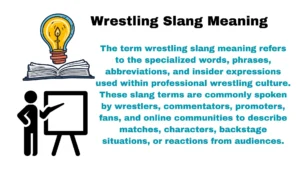
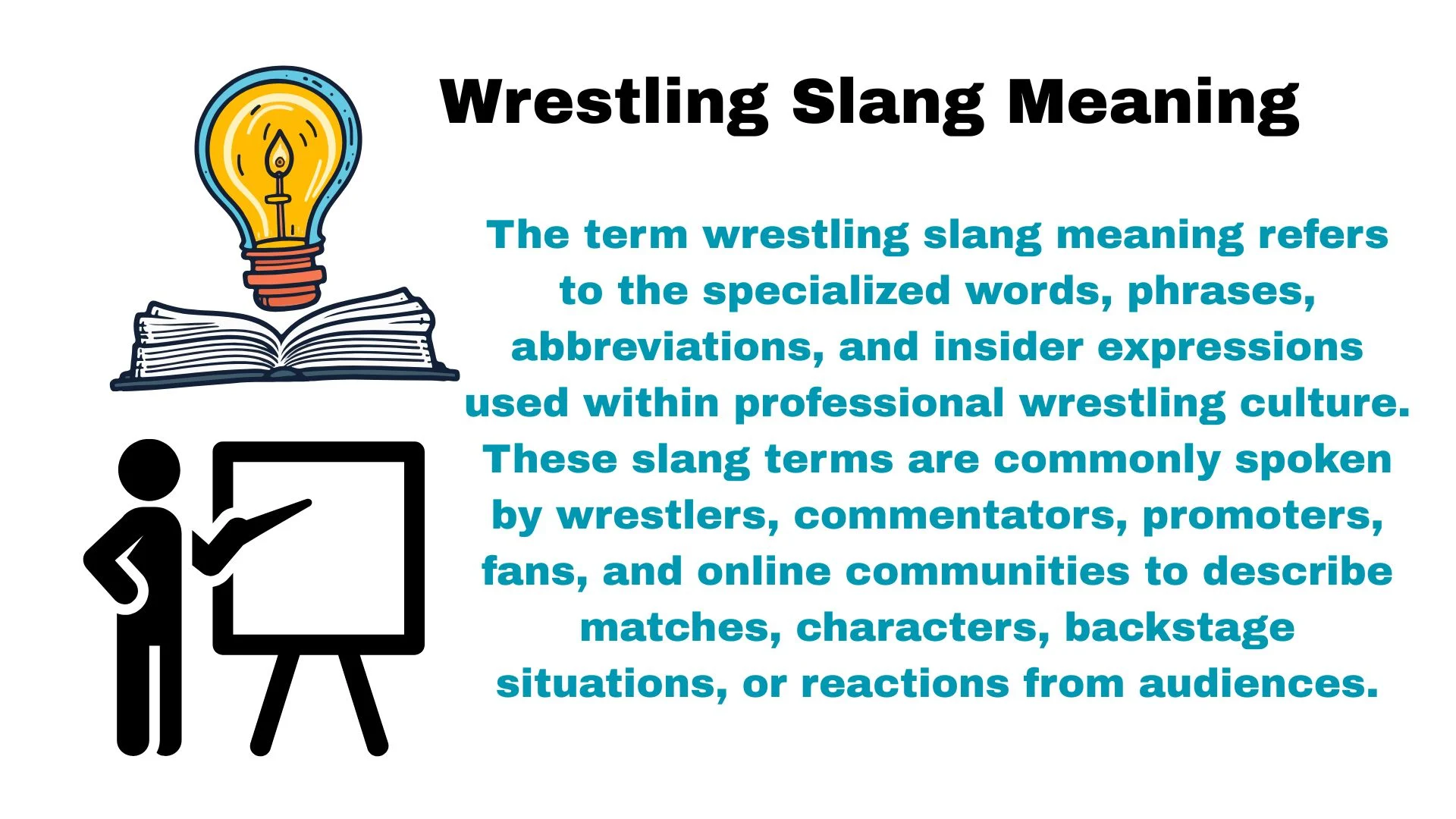
The term wrestling slang meaning refers to the specialized words, phrases, abbreviations, and insider expressions used within professional wrestling culture. These slang terms are commonly spoken by wrestlers, commentators, promoters, fans, and online communities to describe matches, characters, backstage situations, or reactions from audiences.
Unlike standard sports terminology, wrestling slang often mixes entertainment language with industry secrets. For example, words like “heel,” “babyface,” “botch,” “kayfabe,” and “push” carry meanings that outsiders may not immediately understand. A “heel” is a villain character, while a “babyface” represents the hero. A “botch” describes a mistake during a performance, and “kayfabe” refers to maintaining the illusion that wrestling storylines are real.
Over time, many wrestling expressions expanded beyond wrestling itself and entered internet culture. Fans now use phrases like “cut a promo” or “turn heel” in everyday conversations jokingly. Someone behaving dramatically online may even be compared to a wrestling character.
Wrestling slang also changes depending on the wrestling style. Amateur wrestling, Olympic wrestling, and professional wrestling may use different terminology. However, professional wrestling contributes the majority of modern slang because of its entertainment influence and massive online fan base.
Today, wrestling slang is more than insider language. It has become part of digital communication, memes, gaming communities, reaction videos, and pop culture discussions. Understanding these terms helps people connect with wrestling fans and understand online references more clearly.
Background of Wrestling Slang
The history behind wrestling slang comes from the early days of professional wrestling when the industry operated with extreme secrecy. Wrestlers and promoters needed private language to communicate backstage without audiences understanding their plans or scripted storylines. This hidden communication system slowly evolved into wrestling jargon.
During the territorial era of wrestling in the mid-1900s, performers traveled between regional promotions across the United States and other countries. To protect business secrets, wrestlers used coded expressions. Terms like “kayfabe” helped maintain the illusion that matches were genuine competitions. Breaking character publicly was strongly discouraged because promoters wanted fans to believe storylines were real.
As wrestling became more mainstream through television, magazines, and later the internet, fans gradually learned these backstage expressions. Wrestling documentaries, podcasts, interviews, and social media exposed insider terminology to wider audiences. Eventually, fans started using the same slang online while discussing matches and storylines.
The rise of WWE during the 1980s and 1990s significantly popularized wrestling language globally. The internet wrestling community later accelerated the spread of these terms. Online forums, Reddit threads, TikTok videos, and YouTube reaction channels transformed wrestling slang into everyday digital vocabulary.
Modern wrestling slang now reflects both classic industry traditions and internet culture. New phrases appear regularly, influenced by memes, gaming culture, and social media trends. While some terms remain exclusive to hardcore fans, many expressions have crossed into mainstream communication.
Because wrestling combines athletic performance, scripted storytelling, drama, and humor, its slang naturally feels expressive and entertaining. That uniqueness explains why wrestling terminology continues gaining attention online today.
Usage in Different Contexts
Wrestling Slang in Chat and Casual Conversations
In casual chats, wrestling slang is often used humorously or metaphorically. Someone may say a coworker “turned heel” after acting selfishly, or describe an argument as “cutting a promo.” These phrases add dramatic flair to conversations.
Friends who enjoy wrestling frequently use terms jokingly during debates, gaming sessions, or sports discussions. For example, “botch” can describe any mistake, not just wrestling errors.
Usage on Social Media
On social media platforms, wrestling slang appears in memes, reaction posts, and fan discussions. TikTok creators often use wrestling references for dramatic storytelling or comedic videos. Instagram captions may reference wrestling catchphrases, while Twitter users commonly discuss “pushes,” “burials,” or “heel turns.”
The expressive nature of wrestling makes its slang perfect for online entertainment culture.
Professional and Entertainment Fields
In entertainment industries, some wrestling terminology overlaps with media production and performance discussions. Words like “promo,” “character work,” and “selling” sometimes appear in acting, marketing, or influencer discussions.
Although these uses are informal, they demonstrate how wrestling language has expanded beyond the ring into broader communication styles.
Wrestling Slang Meaning in Chat, WhatsApp, Instagram, and TikTok
The wrestling slang meaning on social apps usually depends on context. Younger audiences often use wrestling references casually without discussing actual wrestling.
On WhatsApp chats, someone might say “he’s playing heel” to describe manipulative behavior. On Instagram, captions referencing “main event energy” or “champion mindset” borrow wrestling themes for motivation or humor.
TikTok especially helped wrestling slang become viral. Users frequently create exaggerated “promo-style” videos inspired by wrestling interviews. Audio clips from famous wrestlers are reused in memes and dramatic reactions.
Common examples include:
- Heel – villain or disliked person
- Face/Babyface – good or popular person
- Botch – embarrassing mistake
- Promo – dramatic speech or rant
- Push – receiving attention or support
- Buried – ignored, embarrassed, or treated unfairly
Because social media values dramatic storytelling, wrestling slang naturally fits online conversations.
Meaning in Physics, Medical, and Aircraft Terminology
Although wrestling slang belongs mainly to entertainment culture, some people confuse wrestling-related terms with technical language used in other industries.
Physics Terminology
In physics, “wrestling” itself is not formal terminology. However, phrases like “grappling with a problem” metaphorically resemble wrestling language. Technical scientific discussions rarely use wrestling slang directly.
Medical Usage
Medical professionals occasionally use informal expressions like “wrestling with symptoms” to describe struggling with a condition, but this is conversational language rather than medical terminology.
Aircraft and Aviation Context
In aviation, the word “wrestling” may describe difficulty controlling equipment or handling turbulence informally. Still, wrestling slang itself has no official aircraft meaning.
Most searches involving “wrestling slang meaning” relate to sports entertainment rather than technical industries.
Common Misconceptions About Wrestling Slang
One major misconception is that all wrestling slang is fake or meaningless because professional wrestling is scripted. In reality, the terminology developed from decades of performance tradition and backstage communication.
Another misunderstanding is believing every wrestling term is offensive or aggressive. While some phrases sound intense, many are simply storytelling expressions.
Some people also assume wrestling slang only matters to hardcore fans. However, social media has spread these phrases into mainstream online culture, making them recognizable even among non-fans.
Finally, many users confuse professional wrestling slang with amateur wrestling terminology. The two styles have very different vocabularies and purposes.
Similar Terms & Alternatives
Several entertainment and internet communities use language similar to wrestling slang. Examples include:
- Gaming slang – dramatic competitive expressions
- Internet meme culture – exaggerated reactions and catchphrases
- Sports commentary language – hype-driven vocabulary
- Hip-hop battle terminology – promo-like verbal competition
Alternative expressions may include:
- “Drama mode”
- “Trash talk”
- “Performance persona”
- “Main character energy”
These phrases share the same theatrical tone often found in wrestling culture.
How to Respond to Wrestling Slang
Responding correctly depends on context and familiarity with the term.
If someone uses wrestling slang jokingly, a playful response usually works best. For example:
- “That promo was legendary.”
- “Huge heel move.”
- “Don’t botch this.”
In serious discussions, asking politely for clarification is perfectly acceptable because some wrestling terms are highly specific.
On social media, understanding the humor behind the expression helps avoid confusion. Many references are exaggerated intentionally for entertainment.
Differences From Similar Words
Wrestling slang differs from regular sports slang because it emphasizes storytelling and character roles rather than pure athletic performance.
For example:
- Sports slang focuses on gameplay and strategy.
- Wrestling slang often focuses on drama, rivalries, personalities, and scripted narratives.
Unlike ordinary internet slang, wrestling terminology also carries decades of historical industry meaning.
This combination of performance and competition makes wrestling language unique compared to other entertainment cultures.
Relevance in Online Conversations & Dating Apps
Wrestling slang has become surprisingly common in online conversations and dating apps because people enjoy expressive humor and dramatic references.
Someone might describe themselves as “main event material” in a dating profile or joke about “cutting promos” during arguments. Terms like “heel,” “champion,” and “tag team” are frequently used flirtatiously or humorously.
Memes, GIFs, and reaction videos featuring wrestlers also dominate many online spaces, making the slang easier for wider audiences to recognize.
As internet culture continues blending entertainment references into daily communication, wrestling slang remains highly relevant and widely understood among younger users.
Conclusion
Understanding the wrestling slang meaning helps people navigate modern internet culture, fan communities, and entertainment discussions more confidently. What began as secret backstage language within professional wrestling evolved into a globally recognized style of communication used across chats, memes, social media platforms, and even dating apps.
Wrestling slang stands out because it combines storytelling, humor, competition, and exaggerated emotion. Terms like “heel,” “promo,” “botch,” and “push” now appear far beyond wrestling shows, influencing online conversations and digital culture. While some expressions remain specific to wrestling fans, many have become mainstream internet vocabulary.
Learning these phrases not only improves understanding of wrestling content but also helps decode modern online humor and trends. As social media continues spreading entertainment-based language worldwide, wrestling slang will likely remain an influential and entertaining part of digital communication for years to come.