The phrase cop slang meaning often sparks curiosity because the word “cop” can carry different interpretations depending on context. Many people search for it after seeing it used in texts, social media captions, or trending TikTok videos.
While traditionally associated with police officers, “cop” has evolved into a versatile slang term used in everyday conversation, especially among younger audiences online.
Understanding what “cop” means in slang helps avoid confusion and ensures you respond appropriately in conversations. Whether someone says they want to “cop something” or refers to a “cop,” the meaning can shift from formal to casual in seconds. With internet culture constantly shaping language, slang like this spreads quickly and takes on new meanings across platforms.
In this guide, we’ll break down the meaning, origin, and modern usage of the term, including how it appears in chat, professional fields, and digital culture.
Meaning & Definition
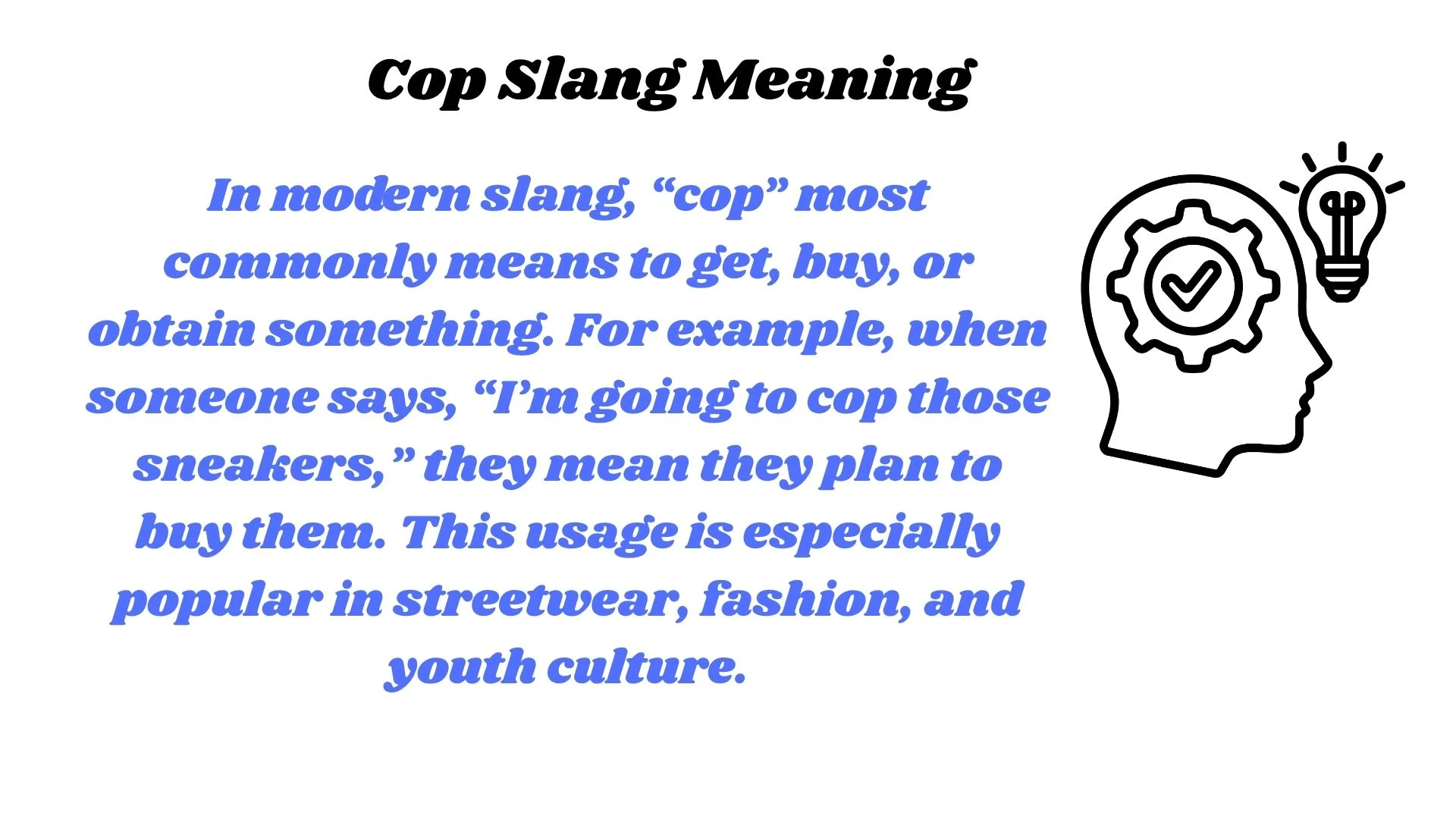
In modern slang, “cop” most commonly means to get, buy, or obtain something. For example, when someone says, “I’m going to cop those sneakers,” they mean they plan to buy them. This usage is especially popular in streetwear, fashion, and youth culture.
Another meaning of “cop” is the traditional one: a police officer. This definition has been around for decades and is still widely used in both casual and formal conversations.
There are also a few extended slang meanings:
- To admit or take responsibility (e.g., “cop to something”)
- To receive or experience something, often negative (e.g., “cop a fine”)
The correct interpretation depends heavily on context. In a casual chat, “cop” almost always refers to buying or getting something, while in news or serious discussions, it usually refers to law enforcement.
Overall, the flexibility of the word makes it popular but also slightly confusing, especially for those unfamiliar with modern slang trends.
Background & Origin (with Examples)
The slang term “cop” has roots going back centuries. The police-related meaning is believed to come from the verb “to cop,” meaning “to capture” or “to seize.” Over time, it became associated with officers who “cop” criminals.
The modern slang meaning—to buy or obtain something—likely evolved from the same idea of “taking possession.” This version gained popularity in urban communities and later spread through hip-hop culture, music, and fashion.
Examples:
- “Did you cop the new iPhone yet?” (Did you buy it?)
- “He’s a cop, so be careful what you say.” (He’s a police officer)
- “She copped a penalty for speeding.” (She received a fine)
Social media platforms like Instagram and TikTok helped push this slang into mainstream use. Influencers and content creators frequently use phrases like “must-cop items” or “just copped this,” making the term widely recognizable.
Today, “cop” is a global slang word, understood by millions, even outside English-speaking countries.
Usage in Different Contexts
Chat, Social Media, and Professional Fields
In casual conversations, “cop” is widely used to talk about acquiring something:
- “I need to cop that jacket ASAP.”
- “Where did you cop those shoes?”
On social media, especially in fashion and lifestyle niches, it’s used to highlight purchases or recommendations. In professional settings, however, the slang version is less appropriate and may be misunderstood. There, “cop” is more likely to refer to law enforcement.
Meaning in Chat, WhatsApp, Instagram, TikTok
On messaging apps and platforms:
- WhatsApp/Chat: “Should I cop this?” = Should I buy this?
- Instagram: “Just copped this fit 🔥” = Just bought this outfit
- TikTok: Often used in product reviews or “haul” videos
The tone is usually casual, trendy, and influenced by youth culture.
Meaning in Physics, Medical, and Aircraft Terminology
Outside slang, “COP” can also be an acronym:
- Physics: Coefficient of Performance (used in thermodynamics)
- Medical: Could refer to “Chronic Obstructive Pulmonary” (as in COPD context)
- Aircraft: Co-pilot (sometimes shortened informally)
These meanings are completely different from slang and depend on technical or professional usage.
Common Misconceptions
One major misconception is that “cop” always refers to the police. While that is the traditional meaning, in modern slang it often means “to buy.”
Another misunderstanding is assuming it’s always informal. In reality, context determines whether it’s slang or literal. For example, in a news report, “cop” almost certainly refers to an officer, not a purchase.
Some people also confuse “cop” with negative actions, assuming it implies stealing. In slang, however, it typically refers to legal buying, not theft.
Similar Terms & Alternatives
There are several slang words similar to “cop,” depending on the context:
- Buy/Purchase – Formal alternatives
- Grab – Casual and widely used
- Snag – Implies getting something quickly
- Pick up – Neutral, common phrase
- Score – Suggests getting a good deal
In the police context:
- Officer
- Police
- Law enforcement
Each alternative carries a slightly different tone, so choosing the right one depends on the situation.
How to Respond to It
When someone uses “cop” in conversation, your response depends on the meaning:
- If it means buying:
“Where did you get it?” or “Is it worth it?” - If it refers to police:
Respond seriously or neutrally, depending on context - If unclear:
Ask for clarification: “Do you mean buy or something else?”
Understanding tone and context is key to responding appropriately.
Differences from Similar Words
“Cop” differs from words like “buy” or “get” because it carries a casual, trendy tone. It often implies intention or excitement about acquiring something.
Compared to “grab,” “cop” feels more intentional and culturally tied to fashion or hype items. Unlike “purchase,” it’s informal and not suitable for professional writing.
Relevance in Online Conversations & Dating Apps
In online spaces and dating apps, “cop” is often used casually to discuss interests, style, or recommendations:
- “Thinking to cop a new outfit for our date”
- “You should cop that—it suits you”
It helps create a relaxed, modern tone and can signal familiarity with internet culture. However, overusing slang may come across as forced, so balance is important.
Conclusion
Understanding the cop slang meaning is essential in today’s fast-evolving digital language. While the word originally referred to police officers, it has grown into a widely used slang term meaning “to buy” or “to get.”
Context plays a crucial role in determining which meaning applies, especially across different platforms like TikTok, Instagram, or professional environments.
As slang continues to evolve, words like “cop” highlight how language adapts to culture, trends, and communication styles. Whether you’re chatting with friends, browsing social media, or engaging in online communities, knowing how to interpret and use this term can help you stay relevant and avoid misunderstandings.
By paying attention to tone, context, and audience, you can confidently use or respond to the term “cop” in any situation.

I’m Daniel Brooks, a writing expert dedicated to breaking down grammar into clear, practical lessons anyone can understand. I focus on helping you write with precision, confidence, and impact in every sentence. Discover more tips and guides at GrammarVibes.com.